Tuesday, June 30, 2015
The Do's and Don'ts of Writing a Customer Case Study [Infographic]
Want to write a powerful customer case study that resonates with your audience? Then check out the following do's and dont's of crafting a successful case study. Read the full article at MarketingProfs

6 Problems Lucid Software Solves Using Kissmetrics
As Digital Marketing Manager at Lucid Software, I can really appreciate all the hard work that has been put into Kissmetrics. It’s a valuable tool for tracking, analyzing, and optimizing our marketing efforts, which include many day-to-day tasks that go above and beyond traditional metrics. Below, I’ve outlined six marketing questions Kissmetrics is helping us answer in ways you may not have considered before.
1. Where do I start with my reseller efforts?
When you are just starting up a reseller program like we are, it may not make sense to start paying for a separate tracking solution right away. We are able to credit our resellers and affiliates for the customers that they send our way through their online presence. We don’t need to deploy a whole new solution for this—we simply use Kissmetrics to track the links we provide them.
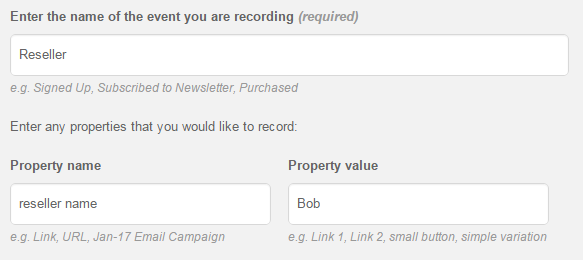
Use Kissmetrics to power your own affiliate program
2. How do I tracking content marketing ROI?
Content marketing is all the rage these days. Just as popular as content marketing are the many articles that give advice on measuring ROI. Even if a marketing effort involves multiple pages, it is easy to quickly track the impact of the campaign as a whole when you’re using Kissmetrics. I was able to put a JavaScript tag on all the pages in question with one event. I also set up a property that tracks the page name for the possibility of future granular analysis. This allowed me to group and measure the performance of different KPI metrics like registrations and payments by related content.
3. Is increasing registration conversions impacting revenue?
In the SaaS world, it is very common to offer an evaluation period for your software so that the customer can ‘try before they buy.’ From a marketing standpoint, this can prove to be a challenge because you now have two metrics that you care about:
- Trial registration rate
- Payment rate.
It’s nice to know that Kissmetrics lets me tie back-end payment information that happens after the fact to the original trial registration. At the end of the day we are interested in the test version that drives the most revenue long-term, not just the version that converts the most people to trial. Kissmetrics makes it easy to keep those two versions distinct.

Kissmetrics is great at tracking A/B tests that actually drive revenue months down the road
4. Which of my customers should I be calling to do market research?
I am often interested in learning more about how a segment of our customer base uses our products, Lucidchart and Lucidpress, or how they first learned about us.
Since Kissmetrics ties anonymous visits to our customers once they login, I can go back in time and say “show me everyone that did X events or visited Y page.” I can then use that customer list to do outreach.
This proved very helpful to our team: we were able to effectively do our homework before we reached out, which means the people we were calling actually valued our calls.

Kissmetrics allows you to do very segmented market research with your own data – no spreadsheets or having to ask developers for data dumps
5. How do I manage my marketing efforts across multiple products?
When you have more than one product, it’s nice to be able to house all your testing and analytics in one place. I personally find this important, because ideas I test on Lucidpress might come from wins we originally got through Lucidchart testing. I can open a new tab and compare the set up on one domain, then quickly set up a test on a completely different revenue stream. Managing multiple domains also allows for another handy feature, which leads into my last question that Kissmetrics helps answer.
6. How can I test my analytics implementation before pushing it live?
Testing can sometimes mean lots of moving parts, so it’s nice to be able to incorporate testing implementation into your QA cycle. We have a development, staging, and production server.
With Kissmetrics we are able to take a look at whether events and properties are being recorded properly in development and staging before they ever get released to production. This is great for me because I can get more eyes on our tests before they go out. Writing the acceptance criteria for the QA team gives me another chance to make sure that all my ducks are in a row.

You can set up Kissmetrics on multiple servers – allowing you to make sure your testing and analytics solutions are working on development and staging servers
Bonus: What’s next?
When I sat down to write out some of the possibly lesser-known advantages of Kissmetrics, I limited myself to just the few benefits I could rattle off of the top of my head and use every day.
As a bonus, I want to mention that Kissmetrics is releasing new features on a regular basis. Whether it is robust regex support or their A/B test report, they are always focused on making their product more indispensable. Lucid Software has been a client for years now and we are excited to see what features they add next!
About the Author: Brad Hanks was the first marketing hire at Lucid Software, the creators of Lucidchart, a flow chart maker, and Lucidpress, an online design and page layout tool that makes brochures, among other things.
China's Great Data Paradox
The way data is collected, shared and used by marketers in China is still evolving, as agencies and clients work together in a test and learn environment.


How to Squeeze Every Drop of Valuable Visitor Data from Your Forms (Without Complicated Programming)
It’s the great marketing catch-22: You need visitor data in order to create value-filled, personalized, highly targeted offers. The more information they provide, the greater your ability to build personas that fit your ideal customers.
But your visitors still aren’t convinced. Like jittery fish, you’ve presented them with the tastiest bait, and they’re hesitant to even take a nibble. So how can you get the information you need without scaring them off?
The answer is…
Progressive profiling.
What is Progressive Profiling?
Progressive profiling uses dynamic form fields to ask for and collect information on prospects based on the information you already have about them. Like a first date, it gets to know new customers in a way that’s gentle and unassuming. What’s your name? What’s the best email address to contact you at? How can I help?
Then, as the customer’s interaction with your product or service continues and greater trust and brand recognition is built, more questions are asked – helping you not just capture leads, but build on the intelligence you’ve gained.
Progressive profiling may start with name, email and question, but can gradually lead to vital details that will help you better understand where your prospect is in the buying cycle: are they evaluating products? Comparing features? Focused on pricing?
Asking questions about their timeframe to purchase and where they are in the decision-making process can help you better understand how and where your product fits according to their needs. Understanding how they plan to use the product can give you valuable insights into tailoring your offer across every stage, leveraging the information you already have about them.
How Does It Work?
Let’s say you sell a product and you have an email newsletter filled with valuable tips and techniques on using it. As is often the case, your prospective customer is asked for their name and email address. Simple enough, right?
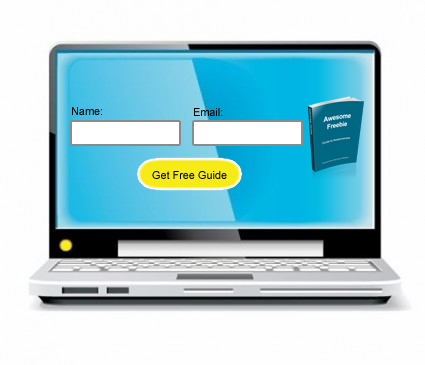
They subscribe and get their first couple of newsletters. They’re starting to feel comfortable with your brand and enjoy what they’re getting so far. Here’s where the progressive part comes in. You’ve got another freebie for them – you just need a bit more information about how they plan on using your product, when they plan to purchase, and approximately how much they plan to spend.
Since you don’t need their name and email address again, the form simply asks the relevant questions you’ve set up. This information helps you gradually begin to understand this customer based on how much they’re willing to share as your relationship with them progresses.

Obviously you’ll want to space these out and give as much as you get – take the time to answer questions, clarify features and options, and so on. Don’t expect the customer to be receptive to answering personal questions by day 2.

Are you interested in applying progressive profiling? Kissmetrics is a great tool to help you with progressive profiling. We collect customer and behavioral data that you can use to optimize your forms. Try Kissmetrics today!
Don’t Forget Your Best Practices
In addition, you’re not going to want to throw best form practices out the window when implementing progressive profiling. Things like:
Being Clear about What Information is Needed (And How It Should Be Presented)
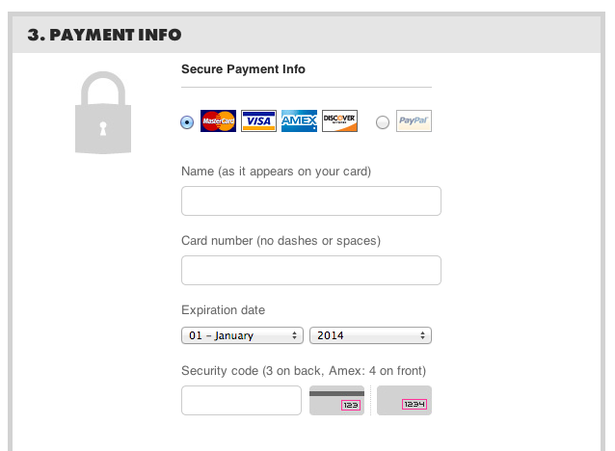
This example from Threadless tells customers precisely how to enter their payment information.
Explaining, if Necessary, Why Certain Information is Needed
The example below, from Money Supermarket tells people why they need the registration number of their car.
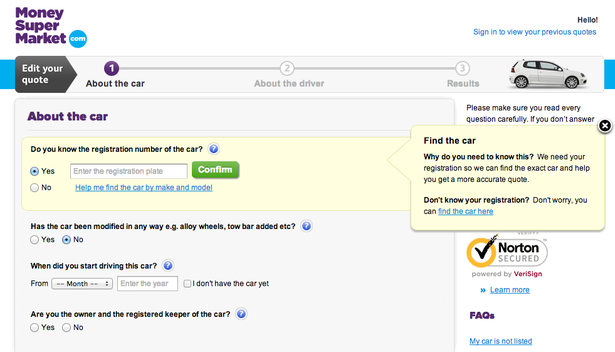
Source: eConsultancy
Make sure your reasoning is reasonable – Money Supermarket could have said, “We need your information to help get you an accurate quote”, but it still wouldn’t answer the prospect’s why? The fact that they need it to find that same exact car and get you a quote is much more sensible.
What Happens After They Subscribe?
And finally, don’t forget to be clear about what happens after the sign up process is complete. How can they download the freebie? How often will they receive email newsletters? Can they unsubscribe or change the frequency? And so on.
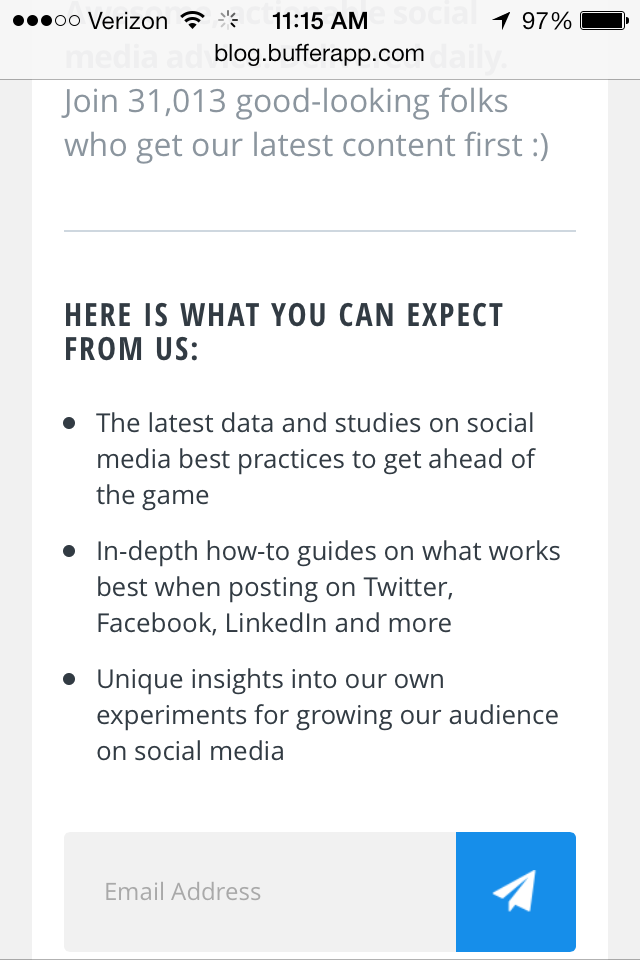
BufferApp sets newsletter expectations before asking for subscribers’ info
How Can You Implement Progressive Profiling?
Progressive profiling is a relatively new function, but there are a variety of solutions on the market that make integrating it into forms easy and hassle-free. Oftentimes, you can do this without any programming knowledge at all. Here are a few services that offer Progressive Profiling as part of their systems:
Salesforce Pardot

Adds a progressive profiling feature that ties in with your existing use of Salesforce Pardot
HubSpot
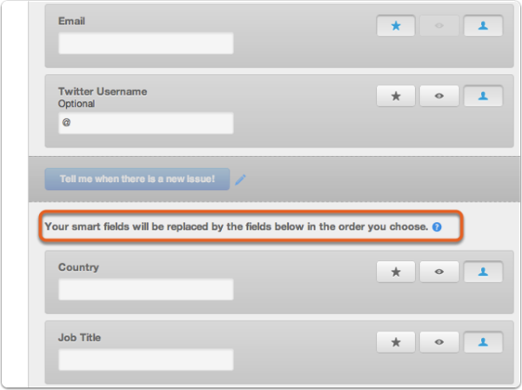
HubSpot refers to progressive profiling form capabilities as “Smart Forms” and provides a variety of best practices you can follow when implementing them.
Act-On
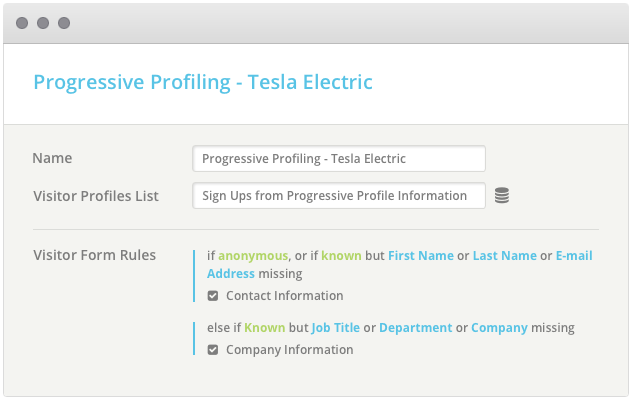
As with other services, Act-On lets you define a set of rules for which other form fields will display. The site also provides an example tour through how its Progressive Profiling system works.
JumpLead
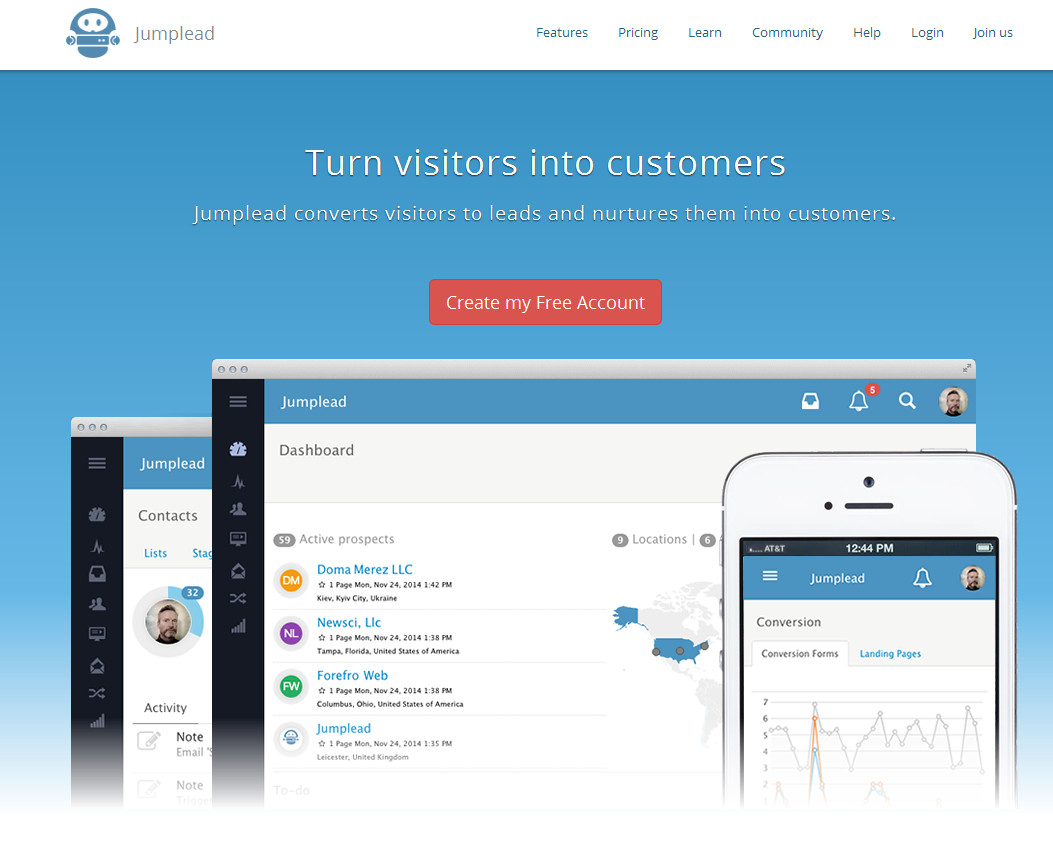
An example of the JumpLead dashboard
JumpLead is a sort of marketing automation/lead generation platform of which progressive profiling forms play a role. Like many of these other solutions, they offer a full scale of marketing automation tools. For WordPress users, JumpLead also has a plugin that can integrate progressive profiling into their existing WordPress system.
How to Get the Best Possible Results from Your New Progressive Forms
It’s easy to fall into the tempting trap of asking for more and more information through more and more form fields as your relationship with the prospect progresses. However, small bits over time (and depending on the customer’s stage in the product’s overall lifecycle, as well as their buying cycle) will help foster a reciprocal relationship while giving them the personal attention and nurturing they crave.
And don’t forget, progressive profiling is just one tool of many designed to help improve your forms and increase your conversion rates. As with any tool, it’s not a silver bullet – it’s all in how you use it. By making progressive profiling a part of your overall sales and conversion optimization process rather than looking at it as “yet another form component”, you’ll be poised to start forming lucrative customer relationships built on a foundation of mutual trust, understanding and expectations.
Now It’s Your Turn
Are you using progressive profiling in your own lead generation forms? How has it worked out for you so far? Share your success stories and triumphs with us, as well as your thoughts on this unique practice in the comments below!
About the Author: Sherice Jacob helps business owners improve website design and increase conversion rates through compelling copywriting, user-friendly design and smart analytics analysis. Learn more at iElectrify.com and download your free web copy tune-up and conversion checklist today!
Big Analytics, Good Will and 'The Queen of the Internet'
Spotify recently bought an analytics platform to quickly stay competitive after Apple got some brand good will at the hands of Taylor Swift.
Sunday, June 28, 2015
Why Solar Energy Is a Good, Renewable Energy Source?
These days we hear a lot about using organic products, biodegradable products, recycling plastics, etc., to minimize carbon footprint and save the environment. But we do not realize that unless and until we minimize consumption, we can not really save our environment. For example, look at the world consumption; Today’s products are manufactured, used and disposed of at a higher rate than the earth can accommodate in a less harmful way. Therefore it is important that we move to green alternatives now, otherwise, will be covered by pollutants and toxins produced in the normal course of the manufacture of non-biodegradable products like plastics. In this article, we will discuss as a green alternative that has a remarkable effect on reversing the negative effects that we created by technological progress and industrial revolution.
There are many ways to fight climate change, but the transition to a power of clean, renewable solar power is an ideal way. So let’s look at some of the interesting facts about solar energy.
· It is the most abundant source of energy. The amount of energy the Earth receives in one minute is approximately 10,000 times the energy needed worldwide.
Undoubtedly, solar energy is the energy source of cleaner available on the planet. Unlike fossil fuels, solar power produces no toxic byproducts. Solar panels use photovoltaic system that has no harmful effect on the environment and humans.
· Solar energy is practical, versatile and flexible in relation to wind energy and the main source of solar energy is the sun that is accessible to all parts of the globe. Unlike hydropower (which is also a source of renewable energy and cheap energy), solar power is not a threat to marine life and / or people on Earth.
· Worried increase utility bills and looking for a way out? Well, solar energy is the solution. By installing solar panels will not only reduce their utility bills, but is also increasing the value of your property. Although solar panels are little expensive at first, they turn out to be efficient and profitable in the long term. The best part is they do not require much maintenance and saves additional costs as well as being sustainable.
One of the misconceptions about solar panels is that they are expensive and affordable only to the elite class is wrong. Solar panels require an investment of time after which you do not have to invest in regular maintenance. In fact, in most countries, the government provides special tax benefits and other advantages of solar energy. Once installed solar panels, freedom of utility bills is obtained, power outages and enhance the value of their property by being friendly to the environment.
Thursday, June 25, 2015
Getting Your First 1,000 Facebook Fans (Infographic)
More and more people are using Facebook to research businesses these days, and they’re doing more than just finding a business’s location and reading posts. People are using Facebook for social proof. They want to see how many people “Like” a business.
Think about it. If you want to go to a new restaurant and you visit its Facebook page and it has 30 fans, does that make you more or less likely to visit the establishment? It probably doesn’t help. The same goes for internet businesses. If you’re running an ecommerce store and you have only 100 fans, do you think that helps your chances of getting orders, especially when your competitor has 5,000 fans?
This doesn’t apply to all businesses, but for most B2C companies, having a lot of Facebook fans is important. This is especially true for small businesses. In certain bigger industries, such as automotive, the amount of Facebook fans doesn’t factor into a buying decision for the consumer.
To help you grow your fan base, Neil Patel over at Quick Sprout has created an infographic that’s full of wonderful tips to help you reach your first 1,000 Facebook fans.
 "Pin It")

Courtesy of: Quick Sprout
For additional tips on getting more Facebook fans, check out this content from Kissmetrics:
About the Author: Zach Bulygo (Twitter) is a Content Writer for Kissmetrics.
12 Add-Ons When Setting Up Google Analytics
Google Analytics is useful, and it's free, but getting the most out of this tool can be enhanced with the following tips.
The Revolution Will Be Curated: Here's What That Means for PR
These days, PR is not just about getting immediate coverage: It is also about the secondary (i.e., curated) coverage that can make all the difference in winning the attention of the desired audience. Read the full article at MarketingProfs
Using the “So What?” Test to Transform Your Copy
Take a look at various products and services around the web, and you’ll find one common theme.
They all talk about themselves and what their product does. Few of them talk about what they can do for you. This is a devastating mistake that marketers and copywriters make.
To write effectively, you can apply a simple test to all your copy.
The “So What?” Test
You want customers, right?
Then start telling them what your product does for them!
Stop simply reciting what your product does. For every line of copy you write, ask yourself “So what? What does this do for them?” Let’s use Dropbox as an example:
Dropbox stores your files in the cloud.
So what?
It means you can use Dropbox and retrieve your files from any device. The files don’t have to be stored on the device.
Now put that in a short sentence.
Dropbox keeps your files safe, synced, and easy to share.
Okay, great. Now I understand what it does for me.
What Does Your Product Do for People?
Customers don’t care about your product itself or how hard you work on it. They care about what it does for them.
So what does your product do for customers? What are the benefits, and how do those benefits solve problems?
Let’s take a look at a couple of products.
Salesforce
Check out this copy for Salesforce:
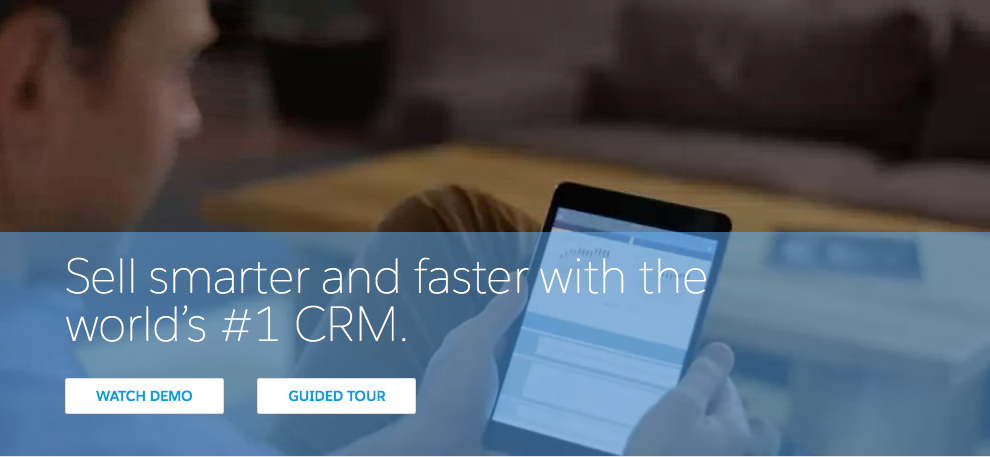
It’s a simple, benefits-focused opening sentence. They don’t write about the product. They write about what it does for people: it helps them sell smarter and faster with the biggest CRM in the world.
They could write this:
Salesforce puts all your leads and sales into one database.
So what?
What does that do for me? I can just use a spreadsheet for that.
Let’s move further on down the page, and you’ll see that it’s all about the prospective customer and what Sales Cloud can do for them:

Sales Cloud handles a lot, so you can take on even more.
The [what the product does], so you can [how this helps you] is a good template for copy. Explain what your product does, and then explain how it helps the customer.
As you can see above, throughout the rest of the page, all the copy is benefits-driven. Even the video isn’t about the product. It supports the top line copy (sell smarter and faster) with a testimonial from a customer.
Let’s take a look at another product, this one in the B2C space.
Sonicare Toothbrush
Toothbrushes are a big market. The majority of people on Earth need one, and they will need to keep repurchasing them until they die. There are a lot of toothbrushes out there from many different companies.
So if you’re responsible for marketing a toothbrush, how do you make yours stand out? Philips Sonicare has done a good job of this. Let’s examine the copy:
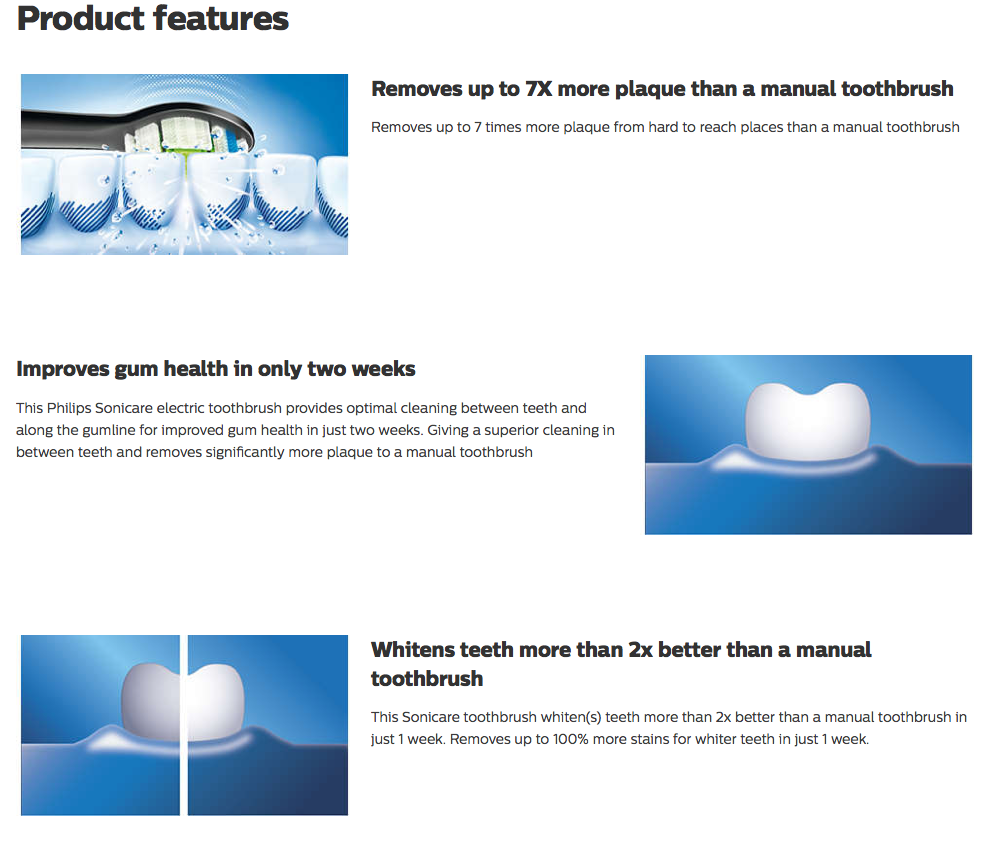
People don’t care about a toothbrush. They care about what it can do for them, the effect it can have on not just their teeth, but their overall health and appearance.
In the above three sections of copy, we get concrete numbers on why the Sonicare toothbrush is better than the traditional manual toothbrush. It removes 7x more plaque, improves gum health in 2 weeks, and whitens teeth 2x better than a manual. This is what people care about – healthy, shining teeth. They don’t care about how many bristles are in each brush or how the toothbrush works. They care about what it can do for them.
The remainder of the page discusses some extra features of the toothbrush:

Do you think Philips hired a copywriter to write this? Probably not. There are no clever headlines or fancy writing here. It was likely written by someone on the product marketing team. Does it matter? No.
You don’t need to hire a copywriter in order to put together an effective landing page. Just speak directly and tell the reader what your product can do for them. You’ll be putting yourself in a good position to boost conversions and bring high quality leads to your sales team.
Hat tip to James Currier for providing us with the “So What?” framework.
About the Author: Zach Bulygo (Twitter) is a Content Writer for Kissmetrics.
Subscribe to:
Posts (Atom)