Please visit Search Engine Land for the full article.
Friday, July 31, 2015
Yahoo Buys Social Commerce Site Polyvore
Yahoo announced this afternoon that it was buying social shopping destination Polyvore. Yahoo said in its release that the acquisition would “strengthen Yahoo’s digital magazines and verticals through the incorporation of community and commerce, and together Yahoo and Polyvore will power...
Please visit Search Engine Land for the full article.


Please visit Search Engine Land for the full article.

How to Succeed at The Most Critical Point in SaaS Sales
If you’re like any other SaaS marketing maven, you want to drive more sales in the best way possible.
And if you’ve given it any thought, you realize the epochal importance of the free trial.
Everything about the free trial is important. I would argue that the free trial is the most critical phase in SaaS sales. Most SaaS sales models place an enormous amount of emphasis on the trial, because, taken broadly, it’s the only marketing method that makes sense.
But that’s where a certain amount of distraction sets in. We obsess over all things free trial, completely missing the whole point of the trial — to get users to use the product!
My goal in this article is to clear the table on the free trial period, and get our heads screwed on right so we can understand how to capitalize on the most important point in SaaS sales.
Let’s Describe What’s Going on Here
Most SaaS sales processes go like this, generally:
- Customer is aware of a need.
- Customer considers alternatives.
- Customer zeroes in on your product.
- Customer starts a free trial.
- Customer converts into a customer.
At point four in the list above, the customer is already deep in the funnel. The funnel diagram included below expands it a bit. You can see that the customer is there — starting the trial. They have just a couple microsteps to go until they are a full customer.
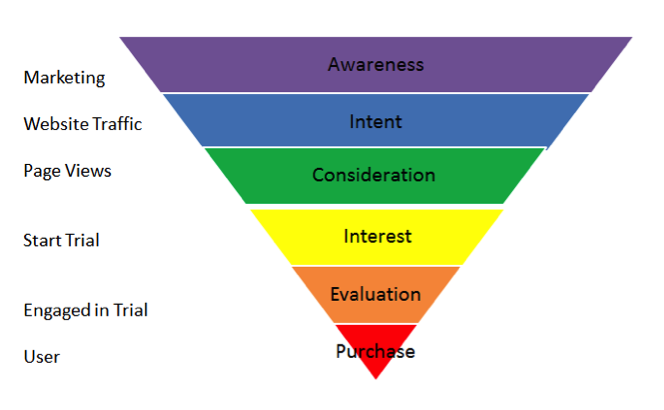
Let’s look at another diagram of this point. This time, I want you to see just how critical it is based on what comes after the purchase point.
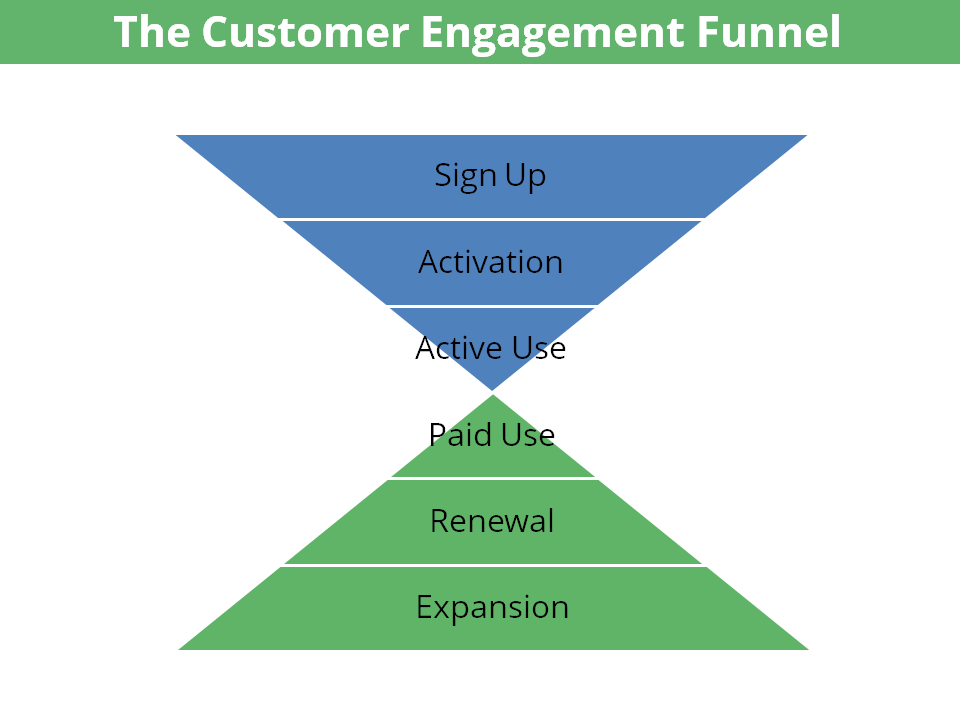
At the nexus of those two triangles is the transition from free trial to paying customer. You can’t experience the benefits without moving them on from the active use/free trial phase.

See Where You’re Losing Customers! Using the Kissmetrics Funnel Report, you can create a funnel and see how many users are dropping off after they signup for a trial. You’ll even be able to drill down and see exactly who upgraded to paying and who did not. See this blog post for more details, or sign up for Kissmetrics to get started!
And that’s where we need to focus on — getting the customer over the hump of free trial and into the utopia of a closed deal.
Understand What Motivated the Customer to Begin With
One of the best ways to figure out how to get the customer to buy for good is to figure out why they started the trial to begin with.
Let me explain.
Why is a customer going to buy your product? Think through the answer, because this is kind of the whole point of your SaaS, right? What does the customer want to achieve, do, or experience?
That’s the reason why your customer started a free trial. The motivation should be no different.
If you are able to satisfy the customer’s need during the temporary trial, then you can compel them to remain a customer by continuing to satisfy them in the future. SaaS isn’t a one-and-done deal. It’s an ongoing process of serving the customer.
The cause for conversion into free trial and the motivation for conversion into a full customer are one and the same. Problem: solved.
Use the customer’s free trial motivation as the tool to drive engagement beyond the trial.
Map Your Customer Journey
To drive further into the reasons and motivations for attracting and retaining customers, do yourself the service of mapping the customer journey.

Why? Because you’re going to experience an epiphany of sorts. Every customer is going to follow a path that takes them from awareness to completion.
One of the most valuable insights from a customer journey map is that you will find out what customers do and see when they sign up for a free trial. You’ll discover whether it’s encouraging or demotivating. You’ll learn what obstacles they may experience when they move through the process.
Look at it From a Long-Term Perspective
Pictures or diagrams are so much better at explaining things than I am. So, here’s what I want you to do. Look at this diagram for at least ten seconds.
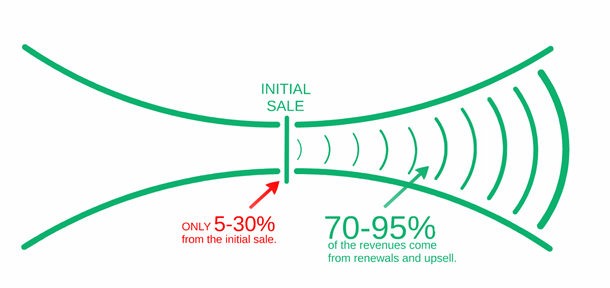
What do you see? I see that you’re going to gain 5-30% of a customer’s revenue at the initial sale point. I see that a whopping 70-95% of the revenue is going to come a week, a month, or a year down the road.
What does this tell you?
- To me that says that I need to take a long term view. Customers don’t prove their maximum value until some time has passed.
- It also tells me that customer retention is killer.
- Finally, it tells me that none of that revenue will materialize unless I close the sale. Forget 95%. I just need 5% right now!
Even a longview of sales informs me that this is a critical point. So let’s get into some of the tactics.
Get a Perspective On Your Goal: Engagement
If you’re honest for a second, you’ll realize that you can’t make the customer do anything. You can, however, coax them to do something.
That most important “thing” is called engagement.
Engagement can be a slippery term, so let me explain what I mean by it. I agree with Lincoln Murphy from Sixteen Ventures who explained that “Engagement is when your customer is realizing value from your SaaS.”
You see, the customer will only want to buy the SaaS when she actually experiences the value that it can provide. Engagement happens many times in multiple scenarios, but it all boils down to the same experience — value for the customer.
In the critical pre-purchase stage, you must drive engagement. The entire free trial period should be designed around engagement — getting the customer to smell, taste, and feel the value of the product.
Without engagement, there will be no purchase.
Know What You Want the Customer To Do
Engagement is meaningless unless you actually understand what action causes engagement.
A customer can’t realize value from the SaaS unless he is doing something with the SaaS.
Doing what? What do you want the customer to do? That depends on your product and your customer.
For Mention.com, as an example, that could be compelling their customer to create an online alert. So, what does Mention.com do with their free trial? They force customers to engage.
The word force sounds all cruel and violent, but it’s actually quite kind and compassionate. Why? Because they want their customer to actually experience the value of the product right from the get-go. There’s no better way to do so than to engage and launch the trial simultaneously.
Here’s how they do it:

Now, let’s talk about that little engagement action.
Make Your Customer Do the Engagement Action
Once you’ve decided what you want the customer to do, it’s time to make them do it. I used the word force in the preceding point. To divest the term of its negative connotations, let me provide a more cohesive set of suggestions around this concept.
Emphasize This Action in Your Email Marketing
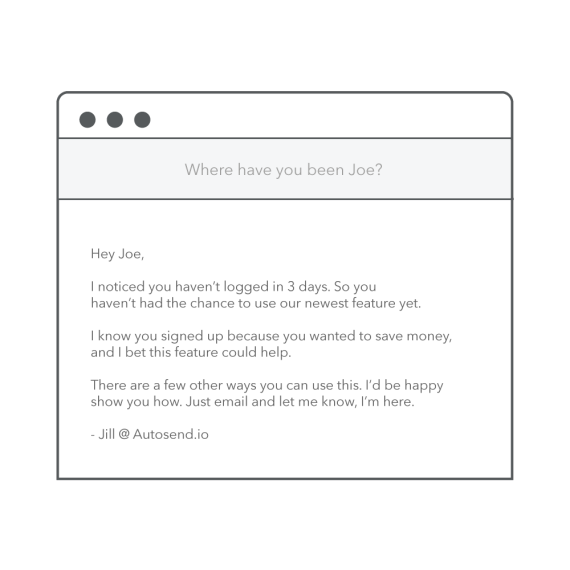
Email message play a critical role in this critical point in sales. How you say it matters. So how should you say it? Beg, wheedle, whine?
No. Command them. Get them to do the action you’ve selected. Here’s an example of such an email. This email sample comes from Autosend.io, which provides an upsell schedule dashboard for SaaS. They want their trial lead to first log in. Makes sense.
Put Dependencies on That Action
What do I mean by this? Show the customer that they will only experience the usefulness of the software if they do the specific action.
Mint.com compels users to add a bill or an account. These two actions are presumably Mint’s engagement action, which will draw the user in to experience the value of the software.
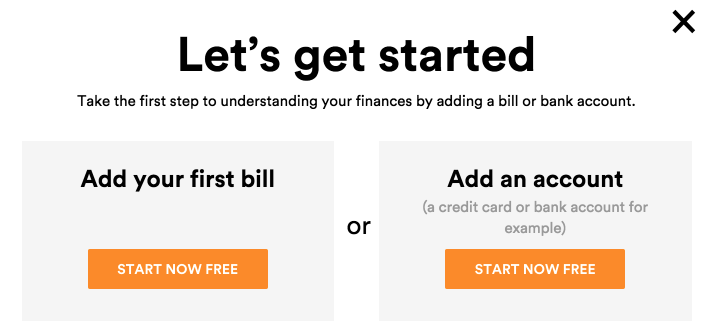
It’s kind of like a game. The user has to unlock the next level, so she needs to do a certain action.
Reward the Action
When the user does that action, give them a pat on the back. They’ve earned it. By applauding their action, you can drive them deeper into the experience and engagement of the SaaS.
Remember, it’s all about action. The user needs to do.
Trial users who stay active are more likely to convert. Notice how Totango sketches out the condition. Trial users are 4x more likely to convert when they are using the SaaS for three days. The opposite holds true, too. A user who cancels is a user who’s not using the SaaS.
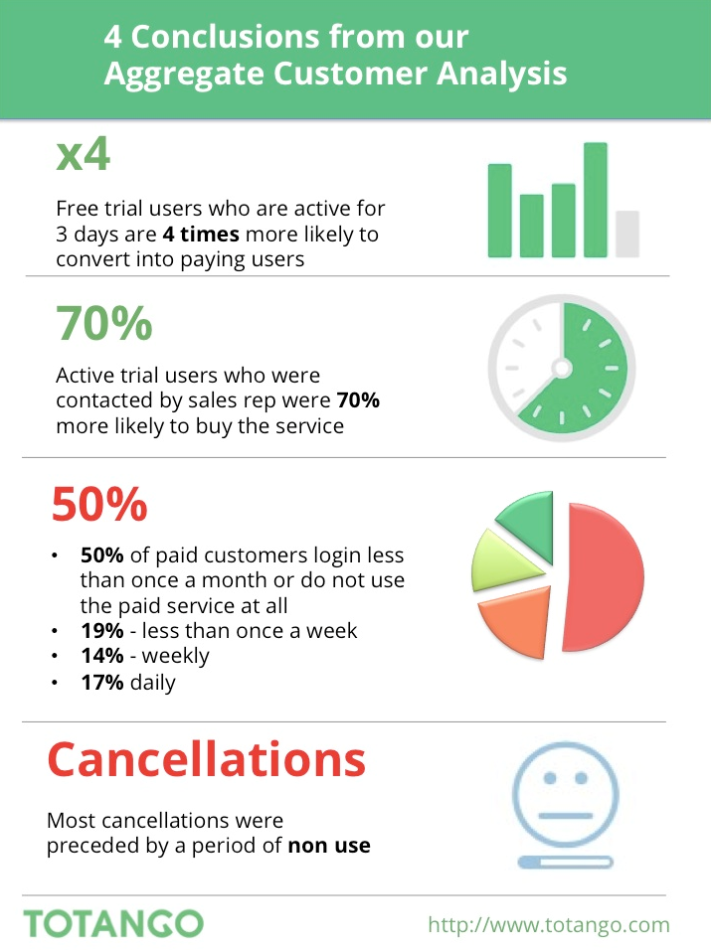
By encouraging activity through a variety of methods, you will improve your success at engagement and sales.
Be Sure to Send a Welcome Email Right Away
According to MIT and InsideSales, the odds of calling to contact a lead decrease by over 10 times in the first hour. You need to be calling them within an hour of them becoming a lead. If you don’t, the chances that you’ll connect with them drastically decrease.
And you should automatically email the free trial user immediately.
The customer doesn’t know what to do after they start the trial. You have to tell them. The way you do that is by sending them an email.
What you say in that email is just as important. There’s a misconception that you need to send them an elaborate letter, complete with details, metrics, motivations, instructions, and all the other things that make for a warm-and-fuzzy welcome experience.
Not quite. The shorter your email, the better.
Here’s an example of a free trial expiration email that I received.
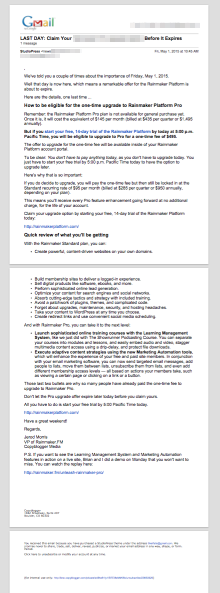
Am I going to read that? No. It’s way too long.
Will I read a short message like this?
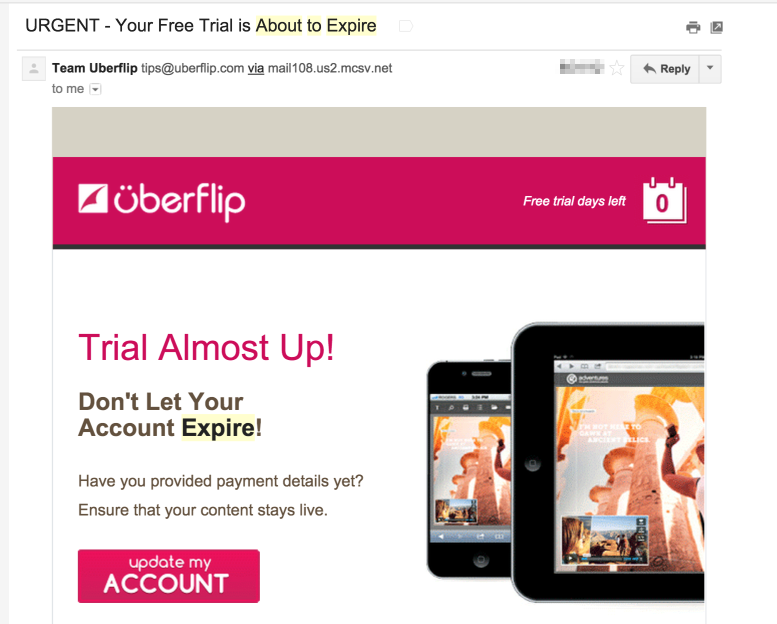
Yes.
Short messages are important. You have several days and multiple emails to communicate with the customer – introduction, action, motivation, etc. The free trial is a process and a sequence, but you don’t need to give them every bit of information all at once.
Shorten that email. No, shorter. Shorter…There.
Send Them More Emails
Email is the communication method of choice for the vast majority of SaaS providers. Use email frequently in order to give the user all the information that they need to…
- Start using the SaaS.
- Complete the engagement action.
- Sign up for the product.
- Your emails should follow a logical series of actions and activities that push the customer to full conversion.
Conclusion
The better you get at converting customers past the free trial, the better you’ll get at SaaS marketing as a whole.
Once you bring customers past the free trial, you can enjoy the massive revenue opportunities, upsells, retention, and awesomeness that follows.
But first, concentrate on getting past that initial hump.
What have you discovered as the best method for converting trial users into full customers?
About the Author: Neil Patel is a lifelong evangelist of Kissmetrics and blogs at Quick Sprout.
Thursday, July 30, 2015
The Top 3 Ways to Get Your SaaS Customers to Open Your Emails
Quick poll question: How many of you have signed up for a free software trial and then cancelled it after getting the welcome email?
Most people have at least once. Mainly because the welcome email was just so awful that there’s no way the software could have been good, right? For SaaS companies, this can be a big problem. Emails are the lifeblood of many SaaS providers, so losing subscribers (and by extension leads and customers) can be the difference between hitting a sales target and not.
Let’s take a look at the top 3 ways you can craft better welcome emails for your SaaS customers.
1. Clear & Tidy Headlines
Recipients know what they’re getting, so don’t worry about cluttering up the headline of the email. It sets up the expectation with customers that you’ll give them what you say you’re giving them. The welcome email is truly a welcome email, no more, no less.
What to try: A simple “Welcome to [company name]”.
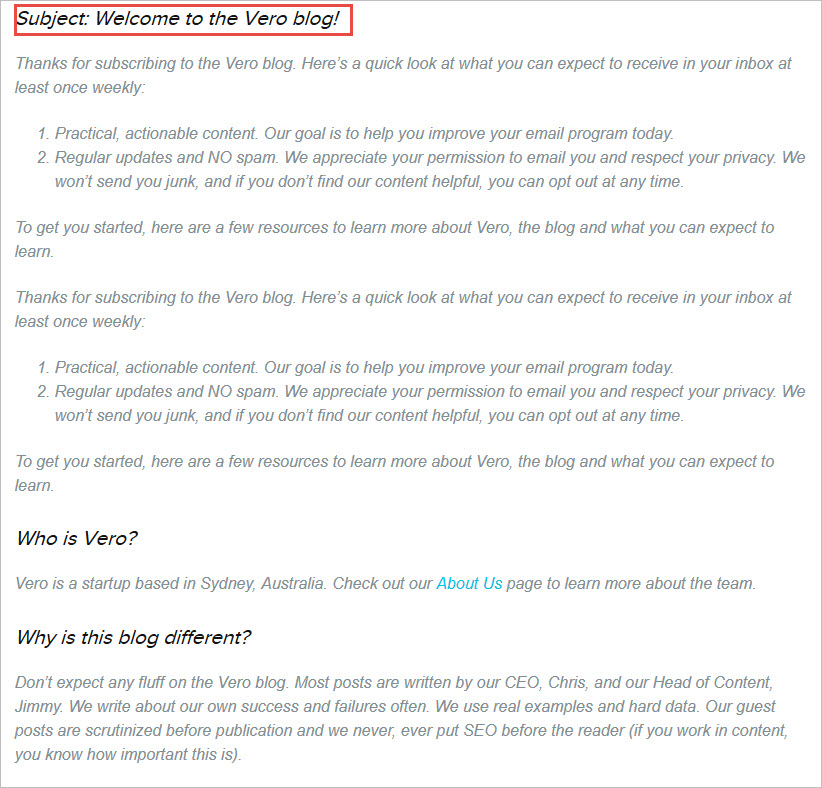
Example: Vero
Vero, an email marketing software company, does exactly that in their first email after signing up to their blog. The subject line is “Welcome to the Vero blog!” Recipients are reminded about what they signed up for (updates from the blog), who it’s from (Vero), and that it’s the first email from Vero (the “welcome” is a pretty big sign.)
2. Clear CTAs Throughout the Email
Many welcome emails just repeat information or contain so many links that readers stop reading after the first couple of lines.
What to try: A single CTA in your welcome email.
Next time, try adding a link for readers to log in to their new account, or a reminder about a feature that solves a pain point for the reader, just keep it simple.
For example, if it’s a free trial of collaboration SaaS software, a CTA to “add coworkers to your account” may suffice.
Example: Vero
You may have noticed that Vero’s welcome email goes against this idea and has a few CTAs in it. But they’re all very simple ones that readers can choose to see or ignore.
- The first CTA is a link to Vero’s About Us page. It’s hyperlinked so readers can check out the page, or continue reading.
- The second CTA is a list of some of the blog’s more practical posts. Again, they’re linked very simply, and the reader can choose to read them now or save them for later.
- The third and final CTA is a set of email addresses readers can send messages to if they have immediate feedback.
Sure, there are three CTAs in the single email, but they’re all pretty simple ones, which is the key thing to keep in mind in your welcome emails.

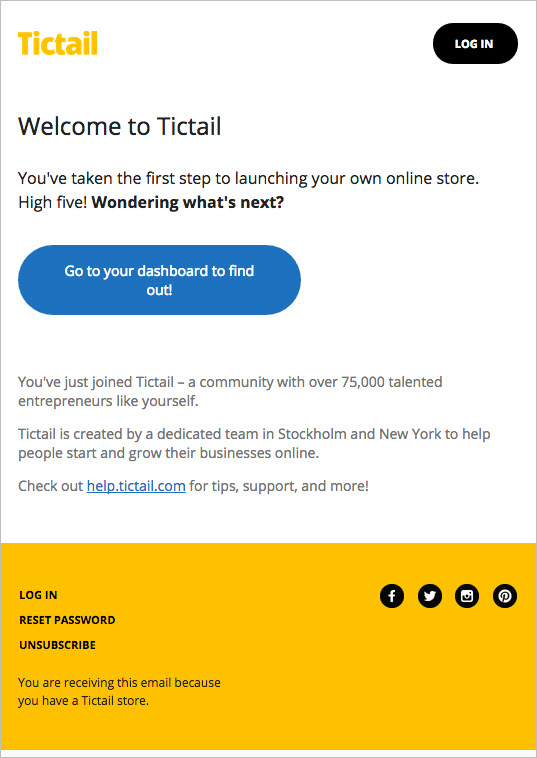
Example: Tictail
Here’s a better example of the one CTA per welcome email – It’s from Tictail, another ecommerce software solution. After signing up , readers are invited to visit their dashboard right away. Simple and clean, with good visuals to invite readers to click it.
3. Consistent Look and Feel
To avoid the spam filter of today’s email accounts, it’s important to craft a welcome email that doesn’t look like spam. However, that doesn’t mean you should ignore your current branding to the point that the recipient doesn’t know who you are and why you’re in their inbox.
What to do: Colors, logos, fonts, company name, etc. all should reflect what’s on your website right now. Ensure that someone’s always looking at your emails whenever you change your branding.
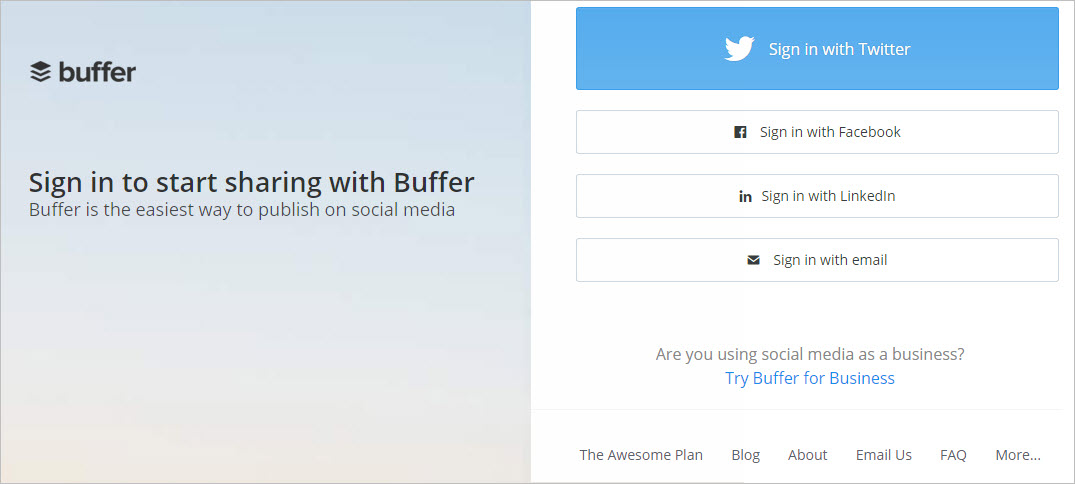
Example: Buffer
Buffer does a great job in their welcome email, using their logo, font, and colors really well.
Here’s their main website:
And here’s their welcome email:

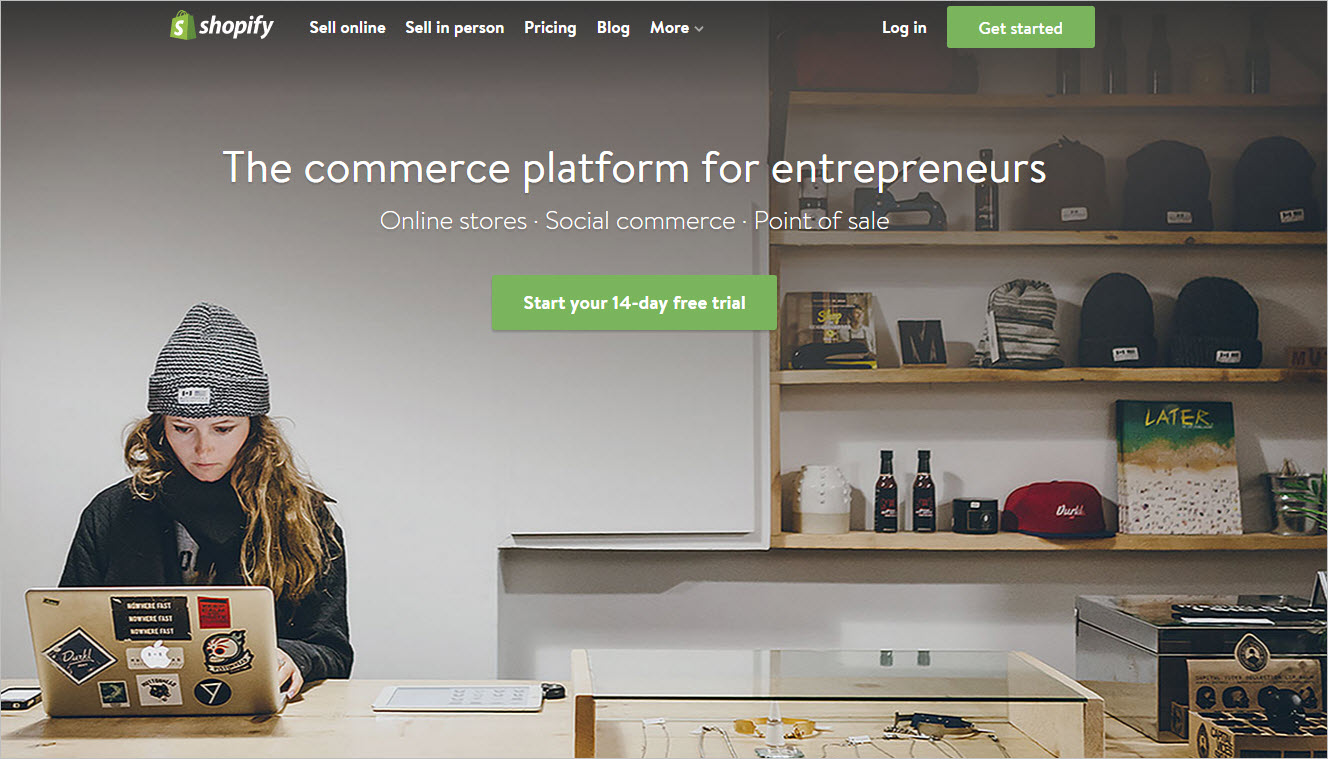
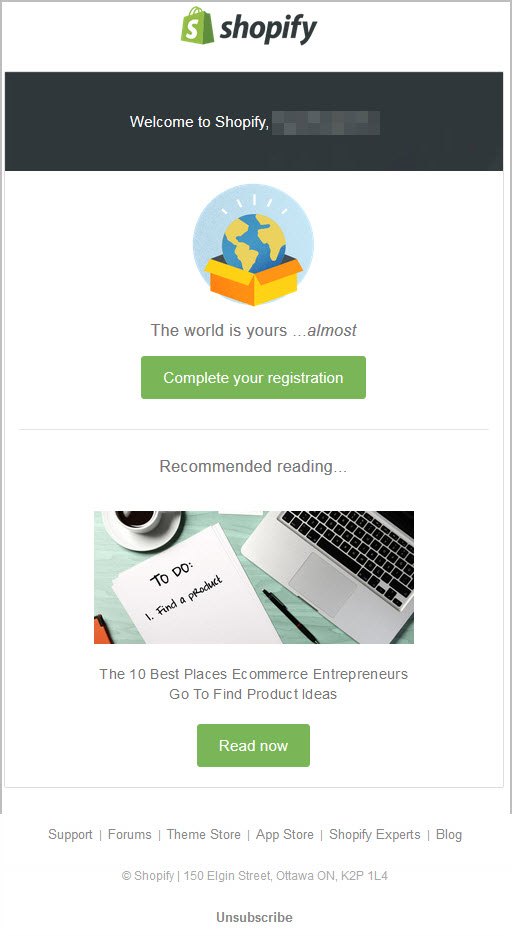
Example: Shopify
Shopify’s welcome email does the same as Buffer, but also includes their quirky, casual tone they use with their audience, who are mainly entrepreneurs.
Here’s their main website:
And here’s their welcome email:
Bonus Tip: Delay Sending That First Email
You’ve probably got your email signup form hooked into software that sends out responses as soon as someone signs up, right? You want to make sure that the lead doesn’t go cold. Yet doing so gives off a negative impression of your SaaS company.
Why? Because it just screams “automated email”. Especially if you’re located in a different time zone. There’s just no way that you’d be sending a personalized email at 3am your time.
What to try/do: Send out a quick email right away that acknowledges the signup and that’s it. Just a short “Thanks for subscribing. Look for our welcome email in your inbox shortly” kind of message. Then, send your welcome message during YOUR business hours [Author’s note: link this to the other article I submitted on personalizing emails], regardless of where the customer is located.
You’ll give the appearance of having someone manually composing and/or sending the email to the customer, even though it’s another automated email. Your SaaS customer’s perception of you goes up, increasing their chances of converting into a long-term paying customer. (Even if they really know that the welcome email is coming from an automated system, it gives the appearance that it’s not, which they like – actually, we all like it. That’s why personalized emails do better than generic ones.)
Conclusion
Welcome emails are a tricky thing to do well. Some SaaS companies cram them so full of information that customers run away immediately. The successful companies welcome them simply and directly, and keep them as customers by sending out a well -written and –timed email that provides useful information to them.
Use these four tips to set up better welcome emails for your SaaS customers. You’ll look more professional, appear more successful, and earn a spot on their vendor shortlist more often.
About the Author: Julia Borgini helps Geeks sell their stuff. A self-proclaimed Geek & writer, she works with B2B technology & sports companies, creating helpful content & copy for their lead generation and content marketing programs. Follow her on Twitter @spacebarpress to see what she’s writing about now.
SearchCap: Google Home Service Search Ads, Right To Be Forgotten Challenged & Bing Emoji Keyboard
Below is what happened in search today, as reported on Search Engine Land and from other places across the web.
The post SearchCap: Google Home Service Search Ads, Right To Be Forgotten Challenged & Bing Emoji Keyboard appeared first on Search Engine Land.
Please visit Search Engine Land for the full article.


Please visit Search Engine Land for the full article.
Five Dead-Simple Tips for Using Google+ to Grow Your Brand
Posted by GregStrandberg
ESL stands for English as a Second Language, and it’s a huge industry in China. Just about every parent wants their only child to go to America to get into business and strike it rich. Learning English is seen as a critical step in making that happen.
For five years, I taught English to kids in China. I started my ESL teaching job in 2008, and by 2012 I thought I had learned enough about my field to help other ESL teachers. Many were struggling like I once had; I thought a website with helpful advice, games, and free handouts would save their sanity.
The site, called ESL Adventure, started in October of that year. It published three posts before I threw the towel in and the blog went silent. I didn’t pick it up again until the following January, when I got in gear and started posting consistently. Soon, there were more than 100 posts on the site, and the traffic started picking up.
Now, when I say picking up, I’m talking about 100 to 150 unique hits each day. Yeah, I’d finally reached the big time.
Joking aside, the site was turning a profit. It might have been minuscule—about $10 a month at first—but it came from people buying things I’d made from scratch, things other teachers were finding to be useful. It felt great, and I wanted more.
Choosing Google+ for business
So how would you get more?
Getting more traffic to the site seemed like an obvious course of action, so I started looking for ways to do that. Starting a social media group seemed like a good bet. (I use group and community interchangeably). I ending up choosing Google+ for my group.
Whoa… Google+? Why would you choose that?
Obviously, I hadn’t heard the network was dying, or should have died, or was going to die soon... dang it!
Yeah, I’d heard all that, but remember, I’d also lived in China. That’s a country where Facebook and Twitter aren’t allowed. YouTube was taken away from us teachers in 2009, and it was a very useful classroom tool.
So I knew that my best bet for my target audience—frustrated English teachers in China—would be Google+. Sure, Google has some problems in the Middle Kingdom as well, but it’s allowed—or more aptly, tolerated by the government.
Like anyone creating a social media group for the first time, I dove right in without doing much in the way of research or planning. The result was my Google+ community, ESL & Bilingual Teacher Resources (see screenshot below).

That's correct: 401 members.
Yep, 401 members might not seem that impressive, but ESL & Bilingual Teacher Resources is actually the seventh-largest ESL community on Google+. For comparison’s sake, the seventh-largest SEO community on Google+ has over 18,000 members.
That’s actually a lot of people. Leading a community like that can really do a lot for your website and/or business.
Creating your plan
Do you have a Google+ community like that, or a social group on another network? If so...
- Is it good enough?
- Is it as good as it could be?
- Is it driving traffic to your website?
- Is it converting website visitors into registered users?
- Is it generating sales for your business?
These are all questions you need to think about. I think about them a lot. I use Google+ everyday, and posting to my group is part of that. The membership number might be low, but the same principles for increasing membership apply to communities of all sizes.
After you give these questions some initial thought, you’ll want to come up with a plan for to increasing your traffic and generating more sales. To help you create you plan, I'm going to give you five dead-simple tips that will work across all industries, niches, and social media channels.
Here's an overview:
- Do your market research
- Consistent content
- Staying data-relevant
- Fair moderation
- Varied content.
Now let’s dive into the details.
Tip #1: Do your market research
Whether you're working in ESL or some other niche, you want to do your market research. A big part of that is spying on various social media groups to see what's working for them.
When I started my group more than a year ago, I didn’t do any of that. I saw them after I started my own group. Remember how I mentioned that I dove right in? When I finally pulled myself back and started to look at the landscape I’d become a part of, I saw these other groups that had huge membership numbers.
But you know what? I already had an ESL website with ESL products, and I wanted to get more visits and more sales. So I started my group, and then went back and did the research. That’s when I found out who my competition was: The largest, most popular ESL communities on Google+.
These are the main Google+ ESL groups:
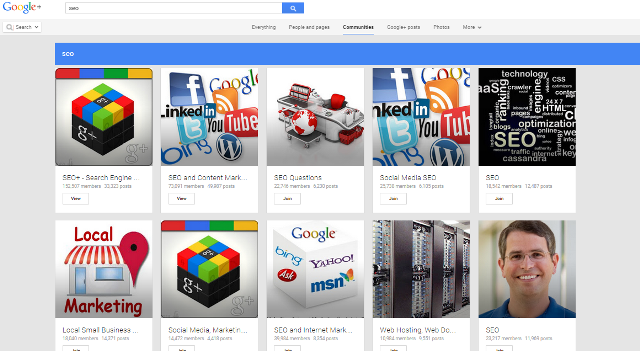
The largest ESL group on Google+ has over 7,100 members, and the smallest one has two members. The page keeps scrolling down, so there are tons of groups; but after the top twelve, the membership numbers fall into the single digits.
It takes time to go through those groups, and maybe that turns you off.
Perhaps recording what you find is a bummer, and best not started upon. It could even be that when it gets right down to it, you’re not interested in seeing your social media group do better. After all, when you see how much work it can take, perhaps doing nothing is the best approach.
That’s what those groups in the single digits said, and that’s why they’re at the bottom. That's not where you want to be.
Tip #2: Consistently post content
You want to consider the posts in a group. You might have a group with thousands of members, but if it only has hundreds of posts, it might not be worth your time.
We all know that Google+ will index your content faster than any other social network, as Cyrus Shepherd pointed out in an August 2013 post. That’s why it’s so important to post and share there. If you have a group, it’s even more beneficial.
Posting isn’t always easy, of course. I’ve kept on top of it by always having fresh content. What’s more, there’s very little spam in my group, and I will crack down on it as a moderator. The only one flagrantly selling anything in that group is me. Hey, I made it, I can do what I want!
No one commented or posted in the group except me for a long time. I’d like to think that’s because English is their second language, but the membership levels continued to increase. It was slow and barely noticeable, but I kept at it. I knew I was getting an increase in traffic and sales to my website, and I could see the referrals from Google+ going up.

A closer look at my Google+ ESL community
Though right now I’m the seventh-largest Google+ community for ESL, if I can get another 65 members, I’ll be the sixth-largest. If I can double my size, I’ll be the fifth-largest.
It’ll take time; but like a wheel rolling downhill, it’ll pick up speed and momentum, and make quite the impact when it’s all said and done.
But that’s the thing—with social media groups, it’s never done. That scroll or feed or whatever, it never ends. It goes on forever, full of posts and new information and chances for you to be noticed. I’m still surprised when I get a Google+ notification on a post from a year ago or more. It’ll be a +1 usually, but sometimes it's a comment.
Most of the time, you’ll forget about those posts, but Google won’t; that’s usually because of your group sharing information. Google+ communities help with that, so think about starting one in your niche today.
Tip #3: Keep content up-to-date and relevant
If you’re not putting up new and relevant content, why should I care about you? Let’s take a look at one of my competitors in the ESL Google+ community pages.
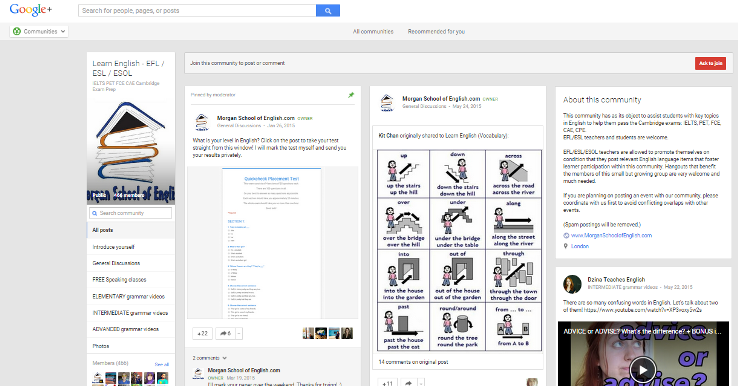
This group has about 60 more members than mine, but you can see a problem right away. The posts are dated. The last post was May 24. Additionally, the pinned post is from January.
That doesn’t really inspire confidence, and it’s a clear sign that this moderator (and ,in turn, this group) has dropped the ball.
The worst is if it’s date-sensitive information, like a promotion or giveaway. Each time you visit, you see it there, a reminder that the group has lost value to you.
Tip #4: Moderate fairly
You might have noticed in that first image in this post that I have the notifications turned on.
Yeah, I’m the moderator, so I want to know when someone posts to my group. The reason for this is spam.
We all hate internet spam, but we know it’s a fact of life. The good news with social groups and communities is that you can get rid of much of it.
It’s a lot easier when you have a small group, like I do, as opposed to one of those larger groups, like the 18,000-strong SEO community I mentioned. In the former, you might get one spam post a day or week; in the latter, they appear every hour, even every minute at times.
What are you to do?
Moderate, that’s what. You have to be vigilante, tracking what’s put into your group. You also need to clearly set some standards for what makes it into your group.
- What qualifies as an acceptable post, and what’s strictly forbidden?
- What are the guidelines for posting in the group, and are they listed on the sidebar for all to see?
- Who is allowed to sell, how often, and what? After all, you’re surely taking that privilege—it’s why you started the group—so doesn’t that make you a hypocrite if others can’t do the same?
These are all good points to think on, and I don’t have all the answers for you. I block a lot of posts in my group, probably more than I allow.
Many months ago, I got ticked off when another ESL group deleted some of my posts. I was trying to post (i.e., sell) my stuff in their group.
It used to rub me the wrong way when I was on the receiving end of some moderator’s distaste, but now I look at it differently. I’m looking after my brand, after all, and I need the 400 people that put their trust in me to keep that trust with me. Cutting down on or eliminating the spam they see goes a long way in accomplishing that. Still, how does that offending poster feel, or do you even care?
Tip #5: Vary the content
No one likes seeing the same things all the time. Alternating between blog posts, videos, images, and songs are great ways to keep your content unique.

If you’re in a niche like ESL without a ton of competition, you’ll often see the same posts in all the top groups. How do you differentiate your group?
Here are a few things I’ve done with my group:
- Promo Posts. The prime purpose of my group is to sell my products. A great way to do that is by writing blog posts about a product and then sharing that post in my group.
- Other Groups' Posts. There are lots of great ESL websites out there, and many have quality info for teachers. I often include information from these groups in my posts.
- Infographics. I love ESL infographics, and so do teachers and English language learners. Vocabulary items work best, like an image of the body with words pointing to “lips” and “knee". People like that, and those things get a lot of shares, which pulls more people into my group.
- Videos. I like to include fun, helpful videos for teachers, and silly (including stupidly funny) videos for students. It’s different from the same-old, same-old, and people respond to it.
- Songs. When I say songs, I’m talking about old music videos on YouTube. I usually post slow ones with subtitles, as these are good for students. Its a good fit for my niche. I bet you can think of something that works equally well for your niche.
- Images. I got into the habit of ending my posting sprees in the group with an image. This would always be some exotic landscape. Eventually, I bundled the images into a PowerPoint presentation that I let teachers download from my website free of charge.
This is simply what I chose to do based on my niche. You'll have to brainstorm and test to figure out what works best for you.
No matter what you decide, though, consider doing additional market research to determine what's likely to resonate in your neck of the woods.
Conclusion
Google+ is still a happening network. It has 343 million members, according to a June 26 post on Social Media Today called Social Media Addiction Statistics [INFOGRAPHIC]. You want to capitalize on those members and make the network a pivotal part of your social media strategy.
Having your own community on Google+ is a great way to do that. Searching out existing communities is easy, and figuring out what posts work won’t take you much time. Soon you can begin posting your own varied content, and in a relevant and timely manner. Membership will increase, as will traffic to your site. If all goes right, your sales will see a boost, too.
This is what social media marketing is all about, and Google+ is a great way to get started.
Sign up for The Moz Top 10, a semimonthly mailer updating you on the top ten hottest pieces of SEO news, tips, and rad links uncovered by the Moz team. Think of it as your exclusive digest of stuff you don't have time to hunt down but want to read!
Subscribe to:
Posts (Atom)