Thursday, December 31, 2015

Our Solar Energy Future

The transport sector of the US business community have helped make this country the strong nation is. Progress has been made in many areas that will strengthen our future of solar energy and improve our position in the world, even more than it is now. The good news comes from the reduction of petroleum use and emissions of greenhouse gases in the transport. This comes from the National Renewable Energy Laboratory and Argonne National Laboratory and confirmed by the Ministry of Energy and its previous assessments. Transport is responsible for over seventy percent of our oil consumption thus reducing emissions of greenhouse gases, accounting for more than thirty percent of this number is very beneficial to our national well-being power.

Solar electric cars are increasing. However, prices will fall further to average consumers can find cars more affordable. Like many of the technology, there will be less expensive ways for manufacturers to produce them. The positive effect on air quality will be. Our future solar energy will become stronger as the benefits are seen by all citizens. The will of the people is behind it, because the results will be positive on the economic cost of gas and the continuous increase.

Progress not only in the US but around the world about our future of solar energy continues on many levels. Many universities are investigating solar cells that develop increasingly effective in terms of the amount of sun energy will turn into practice. Although the use of decreases fossil fuel, the need throughout the developing world to cheap energy is increasing. Once solar energy becomes cheaper to use, there will be more interest worldwide in its use for domestic and industrial use. Germany is an excellent example of what the enormous changes that have taken place in connection with the switch of the nation in solar energy. Our future solar energy will also grow if the same initiatives that Germany has used can be used in the US also. Germany provides financial incentives in the form of payments for his people to make the transition to solar energy in their homes and businesses.

Our future solar energy will have a major effect on our economy with increased employment in relation to many sectors of the labor market. As this industry grows, jobs will be added in the manufacture, marketing, construction, and research and development to the list of job opportunities.

A Year In Review: Search Engine Land’s Top 10 Columns Of 2015

Which columns truly captivated our readers this year? We conclude our year-in-review series by highlighting our most widely read columns of 2015. The post A Year In Review: Search Engine Land’s Top 10 Columns Of 2015 appeared first on Search Engine Land.

Please visit Search Engine Land for the full article.

Wednesday, December 30, 2015

The Benefits of Switching to Solar Power

As our lives become increasingly dependent on electricity to keep our needs, it seems that we must be careful how we get a profitable renewable. While other forms of “green energy” are only practical on a commercial level, solar panels are easy to install-power for residential consumers. Sunlight is a natural source of clean energy that is abundant worldwide so there is little reason not to enjoy. Simply switching to solar panels for 25 percent of its electricity, emissions overall average consumers will be reduced by more than 1.5 tons, helping to conserve energy for future generations, while saving thousands of dollar homes in the long term.

While this may seem like an expensive investment installation of solar energy systems, the average life of the solar system is more than 25 years, during which you are less dependent on a grid. In fact, if installed optimally in the right conditions, the solar panels are able to create the surplus electricity to sell to electric companies.

At the first change solar panels, many consumers decide to buy 1-3kw system, which accounts for about 25-40 percent of its current energy consumption. While this may not seem like much, the amount of electricity generated even a panel can lead to annual savings in electricity bills. In a few years, solar power has completely paid for itself and has 20 years to reduce energy costs for consumers.

A common concern about solar energy is that the cloudy regions receive good sun and force the end user to use only electricity from the grid of the utility company. Although there is a reduction in the amount of electricity produced during cloudy days, the panels installed optimally will collect enough energy to be a worthwhile investment. If the solar system is not able to gather enough electricity to power your home, the houses are without electricity. As a precaution all solar panels will be able to store excess electricity to use the reserve and are able to draw from the grid, utilities connected to ensure that a home is never without electricity. Another common concern is that residents with flat roofs may not get adequate sunlight, but the use of systems modern panel mounting for maximum power, regardless of how the tilt sunroof.

Although the transition to renewable energy appears to be a dangerous investment for the development of modern solar technologies they are both the environment and a great way to save money, even for residential users. The long-term savings from the solar panel to move not only help to maintain a healthy environment for future generations, but also economically benefit the end user.

How to Effectively Use Remarketing (Infographic)

It seems that each year that passes brings some new forms of advertising that marketers can add as another tool in their arsenal.

These past few years have brought native advertising to the mainstream, which comedian John Oliver analyzed this past August:

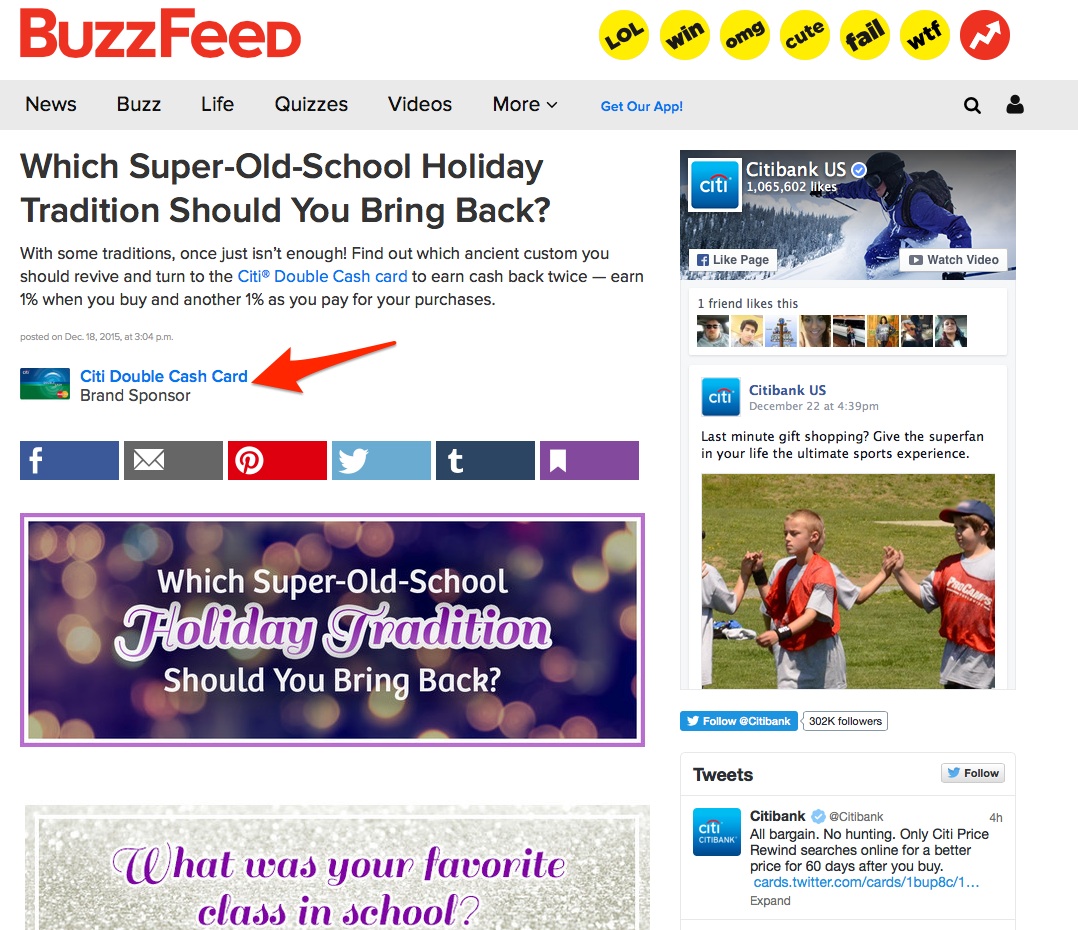
Native advertising has taken hold online. Here’s an example from Buzzfeed:

buzzfeed-native-advertising

This native advertising happens offline as well. You’ll find it in newspapers, magazines and hear it on the radio (it’s sneaky).

The web has also exploded with the growth of exit intent popups. Hover your mouse near the top of the browser to close or switch a tab and out of nowhere comes a near full page ad asking the visitor for something before they leave – typically an email address. Here’s an example, courtesy of 2xecommerce.com:

exit-intent-popup

In recent years we have also seen the growth of retargeting. This purpose of this is to advertise to people who have previously visited a specific site.

For example, let’s say you visit amazon.com today, place a few items in your cart, and leave. A few days later you’re browsing nytimes.com and see an Amazon advertisement with the products you put in your cart. You can then click the ad and are directed back to Amazon, and complete your purchase.

Sound like a new channel you’d like to test? Neil Patel of Quick Sprout has created an infographic to help you out. Whether you’re just diving into retargeting or have been around the block a few times and want a refresher on some of the principles.

How to Effectively Use Remarketing to Increase Your Revenue
Courtesy of: Quick Sprout

Resources for Learning More

We’ve covered retargeting in the past, including a couple webinars:

You’ll also find some great content around the web:

If you’re going to dabble in retargeting, it’s important to measure the results. You can use Kissmetrics to measure and optimize all your marketing campaigns. I’ve written some articles about how to do this:

You can also request a personal demo of Kissmetrics to learn more.

About the Author: Zach Bulygo (Twitter) is the Blog Manager for Kissmetrics.

SearchCap: Local Search, SEO Columns & Engaging SEO Stories

Below is what happened in search today, as reported on Search Engine Land and from other places across the web. The post SearchCap: Local Search, SEO Columns & Engaging SEO Stories appeared first on Search Engine Land.

Please visit Search Engine Land for the full article.

Tuesday, December 29, 2015

Solar Panels A Safe Investment Option

Green energy sources are more sustainable energy production resources. These renewable energy sources can be used several times and do not cause environmental pollution. These are not very expensive. On the other hand, non-renewable energy sources can not be renewed. At the current rate of consumption, the future generation will be under the threat of energy. While green energy sources such as solar energy should be used to meet energy demands.

One of the main dangers of using fossil fuels such as coal oil and natural gas is dramatically affects nature. Carbon emissions through the use of fossil fuels causes global warming and many other health risks. Vehicles and households contribute to global warming. Over the years, people have realized the harmful effects of using them and they are slowly changing to other energy sources that are friendly to the environment. Other sources, solar energy is becoming increasingly popular because it has many positive factors. The sun’s energy is used to generate power here. Solar panels are used to exploit the sunlight, which is converted into other forms. This is also the best method to get rid of electricity bills as the power to homes and commercial organizations can be recovered by the solar panels. People slowly recognize the many benefits of using this technology and make investments in solar panels to produce energy.

Usually, a lot of energy for heating and cooling in the summer and winter use. The use of solar panels for heating, a lot of power and money can be saved. The use of this alternative energy, you help the environment welfares. Green energy sources can also be used for lighting and running appliances. The only drawback is that solar panels can not be used when sufficient sunlight is not available. However, if the sunlight received during the day can be stored in solar cells and can be used at night to power generation. Most people have a misconception that these panels are very expensive and difficult to install. Installing solar panels is not a difficult task if the right help is requested. In addition, the installation cost is not very high in relation to future prospects. Considering all these factors, the investment in solar panels is a good investment to make.

The Best Resources for Account-Based Marketing

I’ve spent the past few weeks discussing account-based marketing (ABM), a powerful but under-implemented strategy. My first post covers the history of account-based marketing, from the “Mad Men” days of the 1950s to today. My second post reviews the reasons B2B firms should implement account-based marketing.

Of course, understanding why you should implement account-based marketing and actually doing it are two different things. Knowing how to implement the right technology stack is essential to unlocking the true power of ABM. For the final post in this series, I’ll go over the best resources for setting up account-based marketing.

What’s ABM, again?

Let’s quickly review the definition of ABM:

  • Account-based marketing focuses marketing and sales resources on a defined set of targeted accounts, where personalized campaigns are tailored to each account.

Now that we understand what account-based marketing is, the next step is incorporating the right technology. Many times firms adopt technology without understanding its real purpose, sometimes without any real marketing strategy. Before you fall into the same trap, you need to take a hard look at the health of your Marketing and Sales departments.

Understanding Your Experience with Technology and Training

Every marketing firm is different. From client experience to employee expertise, your firm is going to have unique resources and know-how. While this might include SaaS, you have to be willing to admit when you aren’t ready for new tech.

Is your staff experienced enough with SaaS solutions to adapt to new systems and processes? Do they have good habits in place with existing SaaS solutions, like LinkedIn Business? Have you introduced new systems in the past?

After answering these questions, you’ll be able to realistically determine what you’ll need for ABM. Asking yourself the hard questions will help you determine the right resources and training for your team’s success.

Make Sure Marketing and Sales Speak the Same Language

No matter the firm, Marketing and Sales should be on the same page. Marketing and sales alignment is necessary for marketing to ensure their campaigns align with the needs of prospects identified by sales, and for sales to make sure they’re selling the right stuff to the right contacts. Both departments need to have the same success metrics, otherwise efforts from one could be counter-productive for the other.

Implementing a technology stack makes this relationship more important than ever. Solutions are built to streamline processes such as updating lead and contact information and streamlining campaigns, so the more you have your ducks in a row, the better. (And let’s not forget the cost of purchasing new SaaS.) As with any investment, you need to make sure you’re getting the most value you can.

Understand the Purpose of Your Technology Stack

It’s not uncommon for many companies, big and small, to jump on new technology. The enthusiasm is great—the fallout, not so much. Many Marketing departments don’t have a clear purpose or strategy for incorporating their chosen technology into their existing sales and marketing pipeline.

Before adding a tool to your technology stack, ask yourself what value it will add to your sales and marketing efforts. Do you want to use ABM because of its laser focus on lead generation and management? Are you looking for automations tools to help with campaigns? Many account-based marketing solution companies offer more than one product. Knowing what you need will help you and your potential provider find your ideal solution.

Identify Tools to Help Achieve Your Strategy

Finally, we’ve arrived at the most important question: What should you look for in an ABM solution? Some important features may include:

Action-Oriented Insights

Any ABM solution can slice and dice data into metrics and charts. However, these insights are useless if you can’t create actionable plans from them. Solid account-based marketing programs will provide straightforward metrics that you can readily understand and use effectively. Ideally, the system will also offer flexibility for you to create customized drill-down reports as you become familiar with your particular needs.

Lead and Contact Data Automation

The very objective of having an ABM stack is to reduce time-consuming tasks so you can focus on engaging your targeted segment. Good ABM solutions will help manage contact and lead information, such as automatically updating contact information or mapping new contacts into the appropriate accounts.

Reliable Support and Services

Just as your firm focuses on marketing and tailoring your services to your customers, your ABM provider should offer reliable real-time support. While this includes a traditional help desk, some firms go so far as to provide consultant services and host educational events.

Integration with Existing Solutions

We’ve already mentioned that account-based marketing requires constant communication with sales. ABM tools that integrate with existing solutions like Salesforce and marketing automation solutions like Marketo will keep your teams running smoothly.

ABM Technology to Add to Your Stack

Now that you understand what to look for in an account-based marketing system, I’m sure you’re wondering where to even begin looking for the solution that’s best for you. Fortunately, there aren’t too many out there right now:

  • Engagio – Though new to the ABM scene, Engagio delivers reliable automation and analytics no matter the size of your target segment. This solution connects to your existing Salesforce and Marketo accounts and your website to keep track of leads, marketing programs and site visitors. The utilization of metrics such as “engagement minutes,” allow for a more straightforward way of tracking lead interest.
  • LeanData – This California-based company delivers two ABM products. Sales Accelerator focuses on lead management, including automated lead conversions and contact owner assignments. Demand Management focuses on account-based reporting and nurturing, ensuring you have the proper data to adjust campaigns and properly target leads.
  • DemandBase – DemandBase offers a full suite of solutions, called the Marketing Cloud, to help teams streamline every step of the marketing process. Solutions include advertising, personalized site experiences and account-based measurements. DemandBase also provides consulting services by experts that will help create a marketing plan that’s best for you.

Before You Hit “Start”

Finally, we come to the $6 billion question: Is it time for you to implement account-based marketing? To review, here’s what’s on the table:

  • The opportunity to target “whale” accounts with tailored marketing campaigns.
  • The power to engage contacts and create organic referrals within accounts.
  • The confidence to sell more than ever before once you’ve set up your stack and hired in the right talent.

Like I’ve said before, ABM really is a no-brainer. But you have to be prepared.

Jumping the gun and setting up an ABM stack the wrong way will just make life harder for Marketing and Sales. Take the time to review your existing solutions and align your firepower with your targets. ABM will help you get where you want to go, but you need to be facing the right direction, first.

About the Author: Alp Mimaroglu is a Marketing Luminary. He specializes in marketing automation, demand generation, analytics, and marketing technology. Alp has extensive experience with both business and consumer marketing. He’s passionate about how technology is rapidly becoming the key to success in both the corporate sales and marketing landscapes. Follow Alp on LinkedIn and Twitter.

SearchCap: Bing Ads Feature Changes, SEO Hype & Search Trends

Below is what happened in search today, as reported on Search Engine Land and from other places across the web. The post SearchCap: Bing Ads Feature Changes, SEO Hype & Search Trends appeared first on Search Engine Land.

Please visit Search Engine Land for the full article.

Here’s How to Close More B2B Deals with Content Marketing

Posted by brianhughes

If content marketing is all about providing relevant information to help your customers make a decision, then no one needs this information more than a B2B customer. B2B customers aren't deciding between what to order for dinner or where to buy their next coffee; they're about to invest millions of dollars in major decisions that could make (or break) their businesses.

With more stakeholders needing to weigh in about these big decisions, it's no surprise that the average sales cycle is longer than ever. Why? For starters, everyone has an opinion, but no one wants to be responsible for saying “Yes! This is the solution worth committing $2 million to” until they are 110 percent confident it is the right choice for their business.

And thus, the sales cycle drags on as more options are considered, discarded, and re-considered. This doesn’t mean, of course, that your only options are to sit idly by throughout the sales cycle or call every day until the lead finally signs on the dotted line (or blocks your phone number). At each stage of the sales cycle, content marketing can subtly make or break your own business’s chances for closing the deal.

How to use content marketing at each step of the B2B Sales cycle

3-Phase-Sales-Cycle

The B2B sales cycle can be broken down into three main phases:

  • Awareness—When a potential client becomes aware that a problem exists and (ideally) identifies your business as a solution provider
  • Evaluation—When the lead compares your business’s solutions with competitors’ solutions
  • Decision—The lead finally makes a commitment, either by choosing your business and converting into a client, or by opting to go with a competitor

In conjunction with the sales cycle, your challenge as a B2B solutions provider is three-fold: 1) Define the buying vision during the awareness phase; 2) stay top of mind during the evaluation phase; and 3) close the sale during the decision phase.

Here’s how to close more deals with content marketing by matching the right type of content to where your lead is in the sales cycle.

Phase #1: Awareness

  • Your challenge: defining the buying vision
  • Your content marketing solution: white papers

When it comes to researching product decisions, more B2B buyers (78 percent) seek out white papers than any other piece of content, according to Eccolomedia. So, when is the right time to introduce white papers into the sales cycle? While white papers are useful at every phase of the sales process, you’ll get the biggest impact during the awareness phase.

Define-Sales-Vision(Image source: photodune)

During the first phase of the sales process, your future clients may be aware that they have a problem or need, but they probably do not fully understand the extent of what they need or the possible solutions. This early phase of the buying cycle is a unique window of opportunity for you to favorably define the buying vision in your terms.

White paper best practices

  • Stick to what you know and shine here: Select topics where your business has deep subject-matter expertise and that naturally complement your current products and services. For example, if your business provides brand consulting for startups, a white paper on logo and tagline selection best practices is naturally within your wheelhouse. The goal of content marketing during the awareness phase is to establish your business as an industry thought leader while simultaneously positioning your company as the provider of a superior product or service.
  • Make your white paper easy to read. Use bulleted and numbered lists, deliver shorter sections, and get the main points across in large, bold text. While B2B decision makers seek out white papers more than any other content, they also have short attention spans. For example, 95 percent of B2B buyers prefer shorter content formats, according to HubSpot.
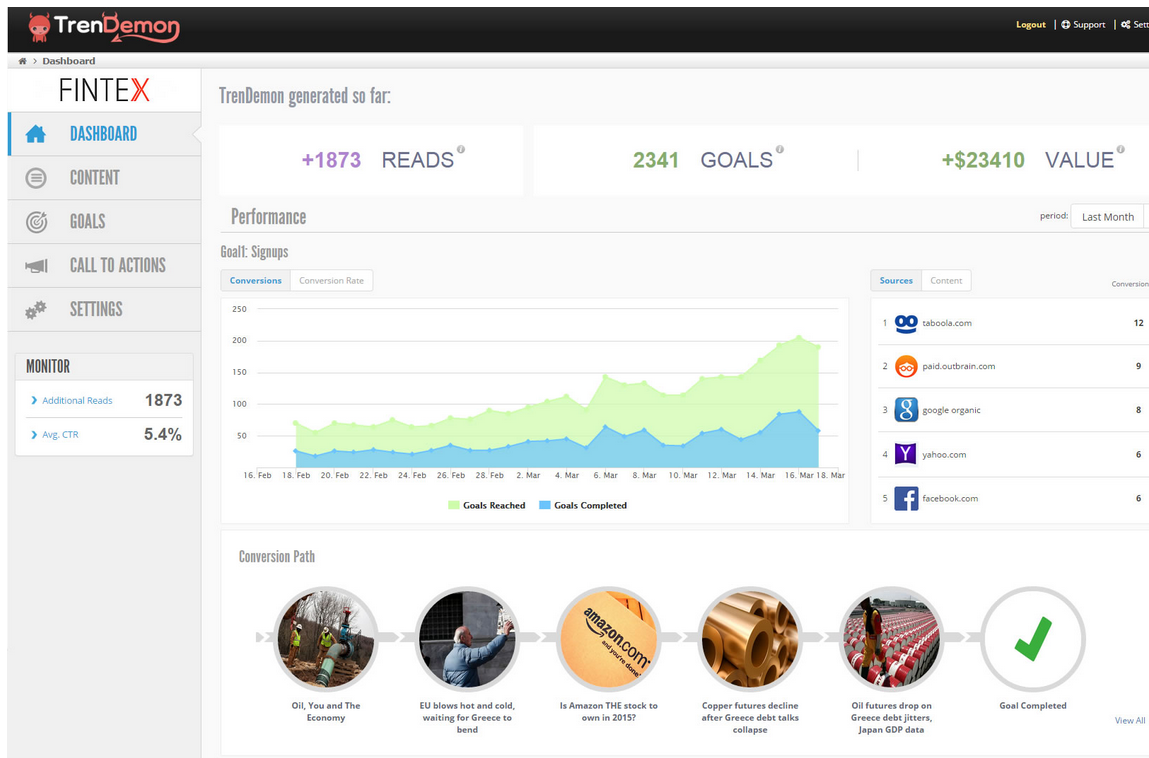
  • Boost content engagement. Once leads visit your website for a white paper download, keep them engaged by continually presenting them with relevant, applicable content. Services like TrenDemon use an algorithm to identify which content on your site is best suited for a specific site visitor. By boosting content engagement during the awareness phase, you continue to establish your business as the superior solution provider and industry thought leader.

Trendemon-Screenshot(Image source: Trendemon)

Phase #2: Evaluation

  • Your challenge: staying top of mind
  • Your content marketing solution: email marketing

During the evaluation phase, a lead is likely considering multiple providers. It’s not practical (nor effective) to call the lead every day; nor is it a good idea to take a wait-and-see approach. While your lead is gathering information from other companies, you need a means for keeping your brand top of mind and continue differentiating yourself form the competition, without being over-zealous in your sales pitch and risking alienating the prospect. Now is the time for a two-pronged email marketing campaign: e-newsletters and using psychological triggers in emails.

Email marketing best practices:

  • E-Newsletters: Weekly e-newsletters, like a “Monday Motivators” or “Wednesday Roundups,” help build a consistent and loyal readership, which improves engagement and click-through rates, while keeping your business top of mind for leads. Your e-newsletter doesn’t need to be long or time-intensive to prepare. Re-purpose content you’ve already created (e.g., blog posts, articles, and white papers) and tailor this content to current industry news or trends. Getting important information into the body of the e-newsletter will help to get eyeballs on key pieces of content.
  • Triggered emails: Triggered emails are emails sent in response to specific actions. For example, let’s say a lead downloads a new white paper on your website or registers for a webinar. Later, they return to your website and search for more information. A triggered email is scheduled to automatically be sent in response to this action. Keep the email simple: a few lines email reiterating your industry expertise and inviting the lead to schedule a brief call with your team to learn more. Triggered email messages have a higher open and click-through rates than “business as usual" messages, according to Smart Insights.

Triggered-Emails(Image source: responsewise)

Phase #3: Decision

  • Your challenge: closing the deal
  • Your content marketing solution: interactive case studies

Case studies are the No. 2 type of content for moving B2B purchasing decisions forward. Case studies can be beneficial at all stages of the sales process, but they have the biggest impact during the final phase. The final stage of the sales cycle can often take the longest. Your lead has narrowed down her choices. If you’ve made the cut, now is the time to seal the deal? At this point in the sales cycle, your lead needs to build company consensus around a single solution provider. Ideally, that solution provider will be you.

Super-Solution(Image source: photodune)

Case study best practices

  • Anticipate and answer your lead’s concerns. Since you’ve been engaging with the lead throughout the sales process, you should have a good idea about what barriers are standing in your way. An engaging case study, complete with client testimonials, is an opportunity to highlight how your brand is the best option.
  • Get visual. In a recent study, 86 percent of decision makers expressed some level of desire to interact with visual content. From infographics to video testimonials, use visual elements in your case study to demonstrate your business’s expertise and successful track record. Consider creating a short (2-3 minute) video case study summary. Videos ranked as the third most effective B2B marketing tactic in 2014, and 70 percent of marketers plan to increase their use of original visual assets in 2015, according to the aforementioned HubSpot source.

The bottom line

From blogs and white papers, to e-newsletters and interactive case studies, deciding on the right type of content to produce can be a serious chore, especially when an important decision hangs in the balance.

However, by matching content to where your leads are in the sales pipeline, you can better address their immediate needs and pain points. Doing so streamlines the sales process and reduces friction so your leads are more confident decision makers and your business closes more deals.


Sign up for The Moz Top 10, a semimonthly mailer updating you on the top ten hottest pieces of SEO news, tips, and rad links uncovered by the Moz team. Think of it as your exclusive digest of stuff you don't have time to hunt down but want to read!

Monday, December 28, 2015

SearchCap: Santa, Google NCR & SEO Success

Below is what happened in search today, as reported on Search Engine Land and from other places across the web. The post SearchCap: Santa, Google NCR & SEO Success appeared first on Search Engine Land.

Please visit Search Engine Land for the full article.