Tuesday, September 29, 2015

How Portable Solar Power Is Set To Take Over

With increasing pressure from alternative energy sources, it is not surprising that this movement resulted in the creation of several portable solar devices. Harnessing the sun’s energy is not only friendlier to the environment than other energy sources, on a sunny day, is limitless and easy to find. Solar energy devices for attachment of portable are available to charge mobile phones, laptops and other small electronic devices. There are also outdoor solar lamps and ovens that are ideal for campers who want a less flammable source of light and food.

Solar panel technology has come a long way since the days of huge solar panels in the gardens or on top of the houses. The science behind solar panels was conveniently reduced to a much more manageable and modified to suit different situations and environments size. Small portable solar chargers are affordable and can charge not only phones, but also MP3 players and blue-tooth headset. For a person on the road, traveling around the world or someone staying in a warm climate, with little or no electricity, a solar fan is practically a necessity to keep you comfortable. Find an outlet available is not only difficult, it can sometimes be impossible, and solar chargers eliminate the need to stick to where power lines run.

One of the greatest resources for laptops is their portability. Unfortunately, the lifetime of the battery usually is not long enough to meet the needs of its users. In an effort to fill a need, there are several types of loads compact solar panels designed both responsible and operate a laptop when the outlets are not available. Some of these portable and even flexible panels can be connected to other units to increase the harness solar energy and therefore the energy they produce.

Despite its size, the solar panels that are used to harness the sun and provide power to a home is only able to use one-sixth of the potential energy. One of the latest advances in solar panel technology is tiles, which are specifically designed to absorb sunlight, near its full potential. These tiles were created by an American company and use solar energy thanks to its dark color and film solar cells in which it is thin enough to be mounted in the form of tiles. New advances in materials for solar technology increases the efficiency of solar panels up to 20%. The number of owners who want to produce their own energy through the use of solar energy is increasing every year and the industry is working hard to meet their needs.

The design of portable solar panels is changing every day.

We Want to Hear About Your Experience With Marketing Analytics Tools

As fellow analytics fans, we’d like to ask for your feedback in a short 15-question survey. Not surprisingly, it’s about analytics tools and what you as marketers need the most from your systems.

We promise this is not entirely self-serving. Not only will the results inform the topics we consider for upcoming blog posts, we’ll share the results with you as soon as they’re in. After all, what’s the point of insights if you don’t share them?

Participate in the survey here: https://sidra2.typeform.com/to/n3X3qu

And of course, sound off in the comments with any stream of consciousness thoughts on analytics tools, data exhaustion, how marketing budgets are determined, and so on.

About the Author: Maura Ginty is the VP of Marketing at Kissmetrics.

Why I Stopped Selling SEO Services and You Should, Too

Posted by ryanwashere

In my 28 years on this planet, I've come to accept two things as fact:

  1. The sun rises every morning.
  2. Marketers screw everything up.

Because of fact No. 2, I had to stop selling SEO.

Why? Here's an interaction I used to have five times a day.

*Phone rings*

Me: "This is Ryan Stewart with WEBRIS. How can I help you?"

Caller: "I'm looking for SEO for [domain.com]. I want to rank for "[keyword terms x, y, and z]. Can you guys handle that?"

Me:

Screen Shot 2015-08-25 at 11.42.47 AM

I'm over it.

I'm tired of explaining to people SEO doesn't work that way anymore. And I need the rest of you to get on board with me, because we're driving ourselves out of business.

I mean, come on people. Look around. We need to stop trying to jam websites where they don't belong. The SERPs have changed.

Google shows the user search results based on what's best for the user. We can't simply have whatever keywords go after rank where we want them to rank.

Let's take a look at a few examples:

Example #1: Search 'best headphones'

Screen Shot 2015-07-17 at 6.22.33 PM

What do you notice?

Not a single result on the first page is a product page.

Screen Shot 2015-07-17 at 6.46.24 PM

They're all articles about different headphone types, their benefits, pricing, etc.

Screen Shot 2015-07-17 at 6.22.57 PM

We're all Google users. We all know these are much better results to get than getting a single brand's product page. I want to shop around, compare products, and read reviews. Don't you?

Example #2: Search 'restaurants in miami'

Screen Shot 2015-07-17 at 6.47.57 PM

What do you notice?

Not a single result on the first page is a restaurant's website.

As a matter of fact, the results above the fold are tied to review aggregators and Zagat ratings.

Screen Shot 2015-08-07 at 7.58.26 PM

Underneath the fold, the results are filled with listicles, reviews and articles.
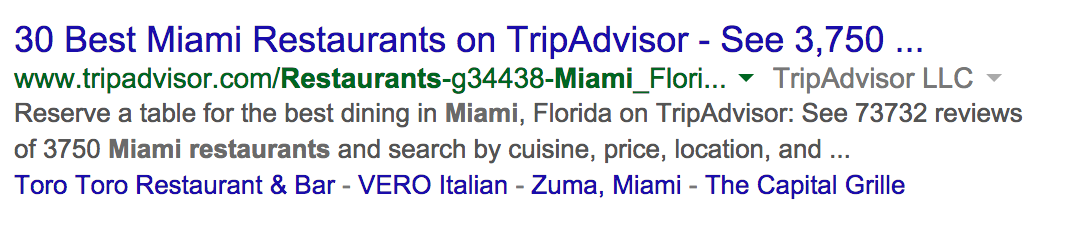
Screen Shot 2015-07-17 at 6.53.03 PM

I'd much rather read reviews about dozens of restaurants than be directed to a singular one.

Example #3: Search 'buy a cheap tv'

Screen Shot 2015-08-16 at 10.36.21 AM

What do you notice?

Ahhhh, yes, I threw this one in for the comment trolls.

The top five results are product pages. However, they're all mega-brands. With the current algorithms, we'll never outrank a brand for keywords like that (without spamming the hell out of it).

What else do you notice?

Screen Shot 2015-08-16 at 10.36.48 AM

Articles, not product pages, are ranking at the bottom of the first page.

Example #4: Google 'plumbers in san francisco'

Screen Shot 2015-08-16 at 10.41.16 AM

What do you notice?

Screen Shot 2015-08-07 at 7.42.26 PM

Not a single result on the first page is a website. There are only review aggregators: Yelp and Google+.

OK, so what's happening?

It's a combination of two things:

#1: Google's got a lot of data, and they're utilizing it

It's safe to say Google understands what users want by analyzing the massive amount of data it has. If we take off our SEO goggles, it's hard to disagree.

Personally, I love the power of choice. I'd rather pick from a list of companies with reviews and comparison data than one that only includes websites that make it to the top of organic listings.

In addition (as much as I hate to say it), I trust brands. I'd rather buy a TV from Best Buy than www.shop-cheap-tvs.com. Wouldn't you?

#2: We're moving into the 'pay to play' era with Google

Not to long ago, Facebook moved into the "pay to play" era. Now Google's is headed that way.

Google's main source of revenue is advertising, counting for almost 90% of Google's revenue in 2014. And one of their main earners, display, is falling fast.

Google's message is clear: If you want to sell directly through the Google platform, then you'll need to pay for it.

Let's go back to my last example, "plumbers in San Francisco." Look at what's happening above the fold with that query:
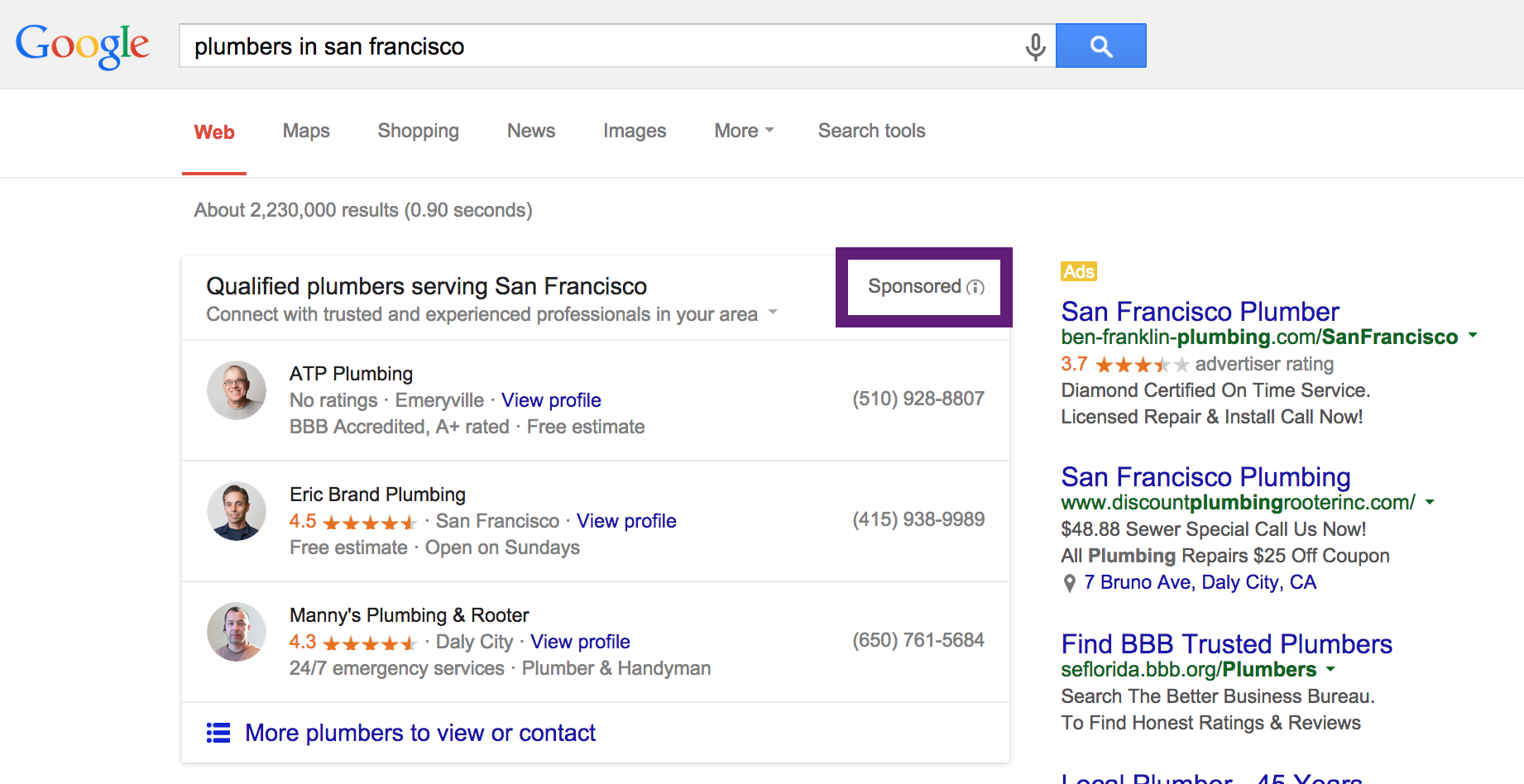
Screen Shot 2015-08-07 at 7.04.45 PMThat's right, baby! Paid local listings.

If this test sticks, it's going to have massive implications on local search. If I were a betting man (and I am), I'm all in that this is the future of local search.

But is SEO dead?

SEO is absolutely not dead. As long as people use Google search, SEO will be alive.

However, let's recap. Money/buyer (i.e., purchase intent) keywords are:

  1. Dominated by huge brands that 99% of the world can't outrank (without spamming)
  2. Returning less product pages and more articles and other forms of content
  3. Triggering the knowledge graph, review aggregators, and more user-focused results

What this means is it's time to seriously reevaluate the landscape. The days of ranking a products or services page first for these purchase intent keywords are limited.

If we want to capture that traffic moving forward, there are three things we can do:

#1: Pay for it

This is very straight forward. I like to use paid search as a remarketing tactic. We capture traffic from all corners of the web, and then when those people are ready to buy (using those money keywords), we use highly targeted paid ads to snag their business.

#2: Create valuable content

If we go back to my first example, best headphones, the results are dominated by content that compares ratings and pricing for various headphones.

No one shares, engages, or links to products and services pages. The fact is, no one except for us cares.

Instead of trying to jam those pages with links, create a piece of content that delivers what Google (and users) want. By creating value with your content, you open it up to earning social media shares and powerful links from relevant sites.

If you want to compete against the big dogs for organic search real estate, content is your best option.

#3: Optimize your website for the web

It's SEO (search engine optimization), not GO (Google optimization).

Yelp is a search engine. Facebook is a search engine. Twitter is a search engine. Amazon is a search engine. Quora is a search engine. Pinterest is a search engine. YouTube is a search engine. See where I'm going?

Each of these platforms offers unique benefits to the user. In a lot of cases, people looking for things on these platforms are likely to bypass Google altogether.

For example, l just moved into a loft in downtown Miami. I loathe shopping of any sort, so I allowed my girlfriend to manage the process for me. She ended up purchasing all of the furniture from Etsy (an e-commerce platform I knew very little about).

I asked her how she arrived there. This is what she told me:

search-engin-pick

  • Pinterest - She used Pinterest search to find inspiration on how to decorate. Using keywords like "loft decorations," she narrowed it down to the specific pieces of furniture she liked.
  • Amazon - She then went to Amazon and searched with keywords that were based on the furniture she liked on Pinterest. She was looking for rustic furniture. Amazon didn't have a great selection of that type.
  • Ebay - So she moved to Ebay, knowing that she could find cheap, secondhand (i.e., rustic) furniture there. She found that most things were a little "too used," so she moved on.
  • Etsy - Finally, she landed on Etsy, knowing they specialize in unique handmade items. She purchased all the furniture from there (and simultaneously broke my bank account).

Now, I realize she could've used Google to search for all these things. She chose not to, though, because she felt it was an extra step she didn't have to take.

She chose to use those specific websites/platforms/search engines because each one was built to handle exactly what she was looking for.

Applying this to your website

The long-winded point I'm trying to make is this:

It's no longer just about optimizing your website for Google. It's about optimizing your presence across the web.

By understanding who our target audience is and where they spend their time, we can attack those platforms and build an organic presence.

  • If you're an attorney, you need to be on sites like Avvo, Lawyer.com and Find Law because they dominate the SERPS
  • If you're a local business, Yelp and Thumbtack are crushing it right now
  • If you have an e-commerce store, get your product on as many platforms where your customers are as possible (including Pinterest)
  • If you sell large ticket B2B services, SlideShare and LinkedIn are gold mines for connecting with C-suite executives looking for information

The list goes on and on...

Bringing it all home

This is why I stopped selling SEO. I'm begging you to follow suit.

We need to educate non-marketers that times have changed. We can't just "rank and bank" for whatever we want anymore.

We don't want to wait around until it's too late. This isn't a phase. This is the way it's going to be going forward, and we all need to get on board with it.

As Google gets more intelligent, we need to get more intelligent about how we approach marketing. That doesn't mean looking for ways to beat the search engine algorithms. Instead, we must learn to use them to our advantage.


Sign up for The Moz Top 10, a semimonthly mailer updating you on the top ten hottest pieces of SEO news, tips, and rad links uncovered by the Moz team. Think of it as your exclusive digest of stuff you don't have time to hunt down but want to read!

SearchCap: Local Marketing Automation Tools, App Indexing May Change SEO & Mars Google Doodle

Below is what happened in search today, as reported on Search Engine Land and from other places across the web. The post SearchCap: Local Marketing Automation Tools, App Indexing May Change SEO & Mars Google Doodle appeared first on Search Engine Land.

Please visit Search Engine Land for the full article.

Clarification on What Is Solar Technology

The idea of ​​using sunlight as an energy source is not so new. In 1839, for the first time, this effect was discovered by Alexandre Edmond Becquerel. He found in some experiments with electrolytic cells that current flows are little more light than in the dark. However, it will still take some time before this discovery could be used in practice.

1883 the first forerunner of today’s solar cells was developed, it was built by Charles Fritts. 1921 managed to Albert Einstein, the theoretical explanation of this effect, for which he received the Nobel Prize in Physics. Two years later, the effect could also be confirmed in an experiment, and so he also received a Nobel Prize.

Solar technology

Solar technology is constantly evolving ever since and always find new applications. The first systems were equipped with solar cells, US satellites were in the fifties, and now there are solar cells in the areas of daily life. Seventy years, in most calculators that has been used either as the only power source or in combination with a normal battery. In addition, solar technology has been used for several years for independent illumination of objects or buildings, or as a source of energy for street lighting and parking meters. Especially in the last decade is mostly in Germany are also increasingly used to produce electricity and hot water. All these methods, however, are based on the same technology.

If you could use all the energy of the annual solar radiation on the earth to produce electricity, which would be able to respond to 15,000 times the annual energy needs of humanity. This use, however, is practically impossible, but the figures clearly show the amount of energy that the sun can provide. Strikes sunlight in different wavelengths on earth. The range is very short light UV wavelength in the range of visible to infrared light in very long wave lengths of light. Some of this light can be used to produce energy without CO2 or other harmful gases. This occurs in solar cells, used to generate electricity. These cells are usually connected together in larger units, such solar modules. They only produce direct current, which can not be introduced in the normal diet. Before the direct current is converted by an inverter into alternating current so that the power supply is easily possible.

The development of solar technology

Today, the development of solar technology is quite advanced, but there are still some problems in the production of solar cells at low cost. At present, these are not mass produced and production are not cheap. However, the current boom and the high market growth can, in the near future make manufactured by mass production and lower prices to come.

SearchCap: User Science Behind Long-Form Content, Bid Boosting On Bing & Google’s Customer Match

Below is what happened in search today, as reported on Search Engine Land and from other places across the web. The post SearchCap: User Science Behind Long-Form Content, Bid Boosting On Bing & Google’s Customer Match appeared first on Search Engine Land.

Please visit Search Engine Land for the full article.

Improving Security and Trust on Your Website

Online retail sales are growing by the day, with U.S. revenues already exceeding $300 billion in 2014, a figure expected to double by 2018. The steady annual rise in e-commerce revenue and scope seems unstoppable, but what does that mean for those old barriers that once held back many from converting online, mainly personal information security? As you may have deduced, these figures hardly represent the full potential of online and/or mobile consumption.

Google changed their algorithm to favor sites with secured URLs, and a MarketWatch survey found that security is the leading barrier to conversion amongst users, with only one third stating they do not shop online in fear of personal data breach.

Moreover, in a different survey a staggering figure of more than 80 percent of U.S. shoppers who searched for a product online expressed interest in finding products nearby — indicating that there’s still a strong preference for shopping in person, but also clues us into a very basic level of mistrust in both the online presentation of items, and more importantly a hesitance to input personal information. High profile user data hacks such as the one eBay faced in 2015 do more to deter already-fearful Web users from handing over their details. It almost doesn’t matter how quickly and effectively the company dealt with the breach, or how much (if any) damage was incurred by the users whose data was leaked.

Establishing or recuperating trust is one of the main barriers to conversion from existing and future consumers. This is doubly true when it comes to lesser known, new, or online-only retailers.

The fact of the matter is, if you own, operate, or promote a website, your information — and your users’ information — is exposed to a certain level of risk. While not all businesses can afford to enlist a team whose role would be to monitor their site’s cybersecurity, it may be beneficial for you (as a web marketer professional) to consider training someone among existing staff to deal with security at least at the basic level.

As business owners, we all know we get a myriad of “lookie-loo leads” — prospects that are just price shopping with no intention of ever committing — and there are dozens of reasons why a potential client would legitimately say “no” to your proposal. Even when dealing with a site that’s been found relatively secure, you or your potential client may be soon parting ways due to the failure of showcasing efforts to secure data. Read on to learn how you can polish any site’s security to improve consumer trust and ultimately, revenue. This post covers how to use security as another piece of your sales funnel and as a pitch to prospective clients.

Some Numbers

When conjuring up an image of a hesitant online user, we often think of the elderly. After all, relative to the younger crowd, they’re likely inexperienced in completing Web tasks, and generally used to doing things a certain (offline) way. Yet, according to the MarketWatch survey referenced above, the fear of personal data being possessed by malicious sources is most prevalent among the 35-and-older crowd, which is probably a much younger cut-off than you anticipated. Moreover, it’s not as though everyone younger than 34 is completely comfortable with sharing and managing information online. In fact, two thirds of consumers say they believe they will fall victim of a data breach in the coming year, and the same percentage say they’re more worried about their information in cyberspace now than they ever were before.

Finally, there’s one new and important factor making nearly all online consumers uneasy: fear of breach is common in all age groups when it comes to completing purchases on mobile devices — a figure we should be mindful of in light of the steady increase in mobile usage for e-commerce purposes, reaching nearly 40 percent of all online sales in the U.S. on Black Friday 2013 alone.

While barriers to conversion are virtually endless, security is one that’s consistently cited by Internet users as a deterrent from completing online purchases. If you own or promote a long-established giant retail chain with well-distributed brick-and-mortar stores and an online store, your reputation is likely doing more than half of the work. If the above doesn’t apply to you, below are some tried and true tips that are essential to strengthening a site’s security.

Audit and Take Action

As with all journeys, the road to safety begins with one major step — figuring out where you are on the safety spectrum. This step should be as thorough as possible; consider involving one or more professionals who can closely examine the site and assess it as whole. Depending on the size of the company, these professionals can either be one-time consultants or full-time team members paid to have their eye on the ball at all times. The following three areas are where you’ll most likely find security gaps during your inspection, so focusing on them is a great start:

  1. URLs: The exchange of data online (credit card data, address data, login pages, etc.) should be carried out over a secure connection that’s authenticated and encrypted via https. I will not expand on this, as we all already know the importance of https for Google. Therefore, it is highly suggested to do the switch if not done so already.
  2. Plug-ins: Does the site utilize any form of open-source platform? If yes, this puts it at risk of data hacking due to various possible security bridges, like loopholes to steal data or commit fraud. Worst of all, if this occurs, it may be extremely difficult to realize the source of the breach. Yes, WordPress! Quick, go and update all your plugins and make sure they are all from a reputable source. If you’re using a reputable web host, they will automatically update your software. If you’re unsure if yours does, investigate and possibly switch to a better host.
  3. Payment verification: If the site accepts payments (e-commerce for instance), carefully examine the level of protection that’s provided by the payment-processing program the site subscribes to. In most cases, it would be beneficial to take additional measures in order to boost this level of security, starting with the purchase of reputable financial verification software such as VeriSign, MasterCard Merchant Fraud Protection, and more.
  4. Data validation should be done on the client side, not server side: Many web forms include JavaScript validation. If the validation process is done on the server side, it means nothing. Make sure all JavaScript validations are done on the client side, or you might find yourself an easy prey for hackers.
  5. Password: Everybody knows they should have a strong password, but this is not always the case. It is critical that you have a bullet proof password to all access points of your website. Avoid generic user names such as admin, user, or test and avoid using your email and your user name. Change your passwords every quarter. Set a reminder to do this.
  6. Consider a web application firewall: this can be your first line of defense. The firewall inspects incoming traffic and blocks hacking attempts right of the bat. Until a few years ago, firewalls were available only as an added hardware. Now you can contact your hosting company and ask to add the application to your hosting package. Reputable hosting companies include them as part of your plan.
  7. Limit access to certain directories and restrict file permission: in most hosting accounts, and in those usually done through FTP, you can control level access and file permissions on your server. This is a very effective way to block certain areas of your website and to reduce the risk of unwanted activity. Read more about it here.
  8. Invest in and keep up with advanced security software. By now you realize the importance of ongoing security scans, but it can be a nuisance to update software at the high rate most security programs demand today. Regardless — take on the role of security by remaining up-to-date on the latest software, or you could be surprised of where it may hit you (spoiler: it could impact the site’s rankings). This goes further than installing the latest version of McAfee or Norton, it entails ensuring vital components of the site’s transaction processes are up-to-date, such as the shopping cart; if it’s based on an outdated or open plugin, one simple breach could mean compromising the client database, which may expose them to breaches on other platforms.
  9. Avoid storing sensitive data: Generally speaking, PCI regulations prohibit the storage of customer information (especially payment method details) beyond the completion of a transaction. If you have smaller/beginner e-commerce clients, this may be a handy memo for them. There are exceptions to this rule, such as recurring payments. However, it’s strongly advised to limit the information kept to a bare minimum, such as what the system requires to issue refunds. If your clients keep to this rule, they’ll rest easy at night knowing that even in the event of an attack, there will be no sensitive data that can leak.
  10. Penalize suspected breaches: Ever forget a password or type one out incorrectly? We’ve all been there – it’s only natural. What isn’t natural is making dozens of back-to-back attempts at passwords in a short timeframe. If you haven’t already, make sure the login page is set to deny login after a certain number of failed attempts, typically three. It doesn’t have to be a hard block, even a temporary ban of 30 minutes can make eager brute hacker-bots skip onward to the next unattended cyberspace.
  11. Clearly define, designate and stick to admin roles: The number of people who are exposed to internal information in a company can easily exceed what’s necessary, considering high employee turnover and general failure to contain data. They say the greatest threat to data comes from within. Keep close tabs on who is exposed to sensitive information, and go the extra mile by switching up passwords to security software and admin panels often.

Don’t Keep Security a Secret

Preventing a potentially financially devastating attack is an end in and of itself. Studies have found that prominent trust signs, such as conspicuous SSL layers actively boost customer trust and thus positively impact sales. Any reputable site should display trust signs proudly, including accreditations, encryptions, and verifications. These symbols subconsciously — but powerfully — indicate to clients that the business is serious and concerned about their online safety, helping them feel comfortable completing a purchase or handing over precious information.

It shouldn’t end there, however. Consumers know security is also in their hands, so any help provided to them in order to understand how to protect themselves online is beneficial and works to establish the site as an authority on online security — not a bad place to be. For instance, you can be more transparent by giving clients access to their stored account details and teaching them about the importance of having a unique password by raising the minimum level of complexity; making real time automated recommendations. When all parties are well informed about what constitutes as unsafe behavior and make a conscious effort to be safe, it’ll make fraud easier to detect.

Stay Ahead of the Next Attack

Unfortunately, hackers are just as sophisticated and creative as cybersecurity experts. For site owners, this means living in a never-ending arms race where an attack may always be just around the corner. Assuming your client is already keeping their security software consistently up-to-date, their best bet to stay safe is to test the network occasionally by running cyberattack simulations. This can be carried out by a cybersecurity professional, and it should be a regular protocol — especially before important sales or promotions when system overflow may make data more susceptible to real time attacks. In severe cases, Google may dole out a manual action and send an alert to Web Master Tools (Search Console), indicating that the reason for the penalty is Malware or third party hacking.

Though often enlightening, periodic attacks should not be relied on as the only measure of site security on an ongoing basis. The best way to monitor suspicious activity is by setting up real-time alerts and consequences for suspicious activity. Depending on the niche you’re dealing with, that could mean denying registration or checkout completion for any of the following cases: a foreign IP, multiple attempts at registration / login / checkout completion, suspicious telephone number input (e.g. 111-111-1111), multiple identical orders placed, or if an order is placed that differs greatly from typical new client projections. By being able to identify these behaviors real time, you could stop attempts at fraud in their tracks.

You’re on your way to becoming an online safety expert. Use the above information as a starting point, and lay the foundation for advanced cybersecurity. It can and will pay off in revenue and trust. Once you become aware of the risks that loom, you may be surprised to realize how many close calls you and your clients have had — and how effective security measures need to be.

About the Author: Asher Elran is a practical software engineer and a marketing specialist. He is the CEO at Dynamic Search and founder of Web Ethics.

The SEO And User Science Behind Long-Form Content

Nobody wants to read long pages of content on the internet, right? Columnist John Lincoln disagrees, providing compelling evidence that this type of content not only gets read, but also ranks and converts well. The post The SEO And User Science Behind Long-Form Content appeared first on Search...

Please visit Search Engine Land for the full article.

Solar Power Is a Viable Source of Energy

Solar energy is derived from solar energy operated by a photovoltaic (PV). Photovoltaic units is first used as a source of electricity in small medium sized applications. One of the first commercial use of a photovoltaic system equipment powered by the sun. Today, photovoltaic units are used in homes, businesses, and the number of connected systems has increased in the millions. Solar power stations were built on an industrial scale and produce hundreds of megawatts. Let’s look at the different parts of a photovoltaic module of the house and discuss why you want this type of unit.

Solar panel

A panel or cell, is designed to absorb the sun’s energy and convert it into electricity or heat. A photovoltaic module is packaged and a set of bonded cells making up the network of a photovoltaic system that generates and supplies electricity in commercial and residential applications.

Investor

Photovoltaic systems convert light into an electric current. An inverter is a device that supports low-voltage, high-current DC signals from the cells and converts them to 120 volts AC, which is directly compatible with your local power grid.

Why solar energy

Over the years, using the sun for energy has become a set that really worth, and there are many reasons to use this energy. It is the free energy from the sun, you can use sunlight and convert it into energy for your home. It is clean and can be used to heat or cool your home without any impact on the climate. These systems do not produce carbon dioxide. It is renewable, while other sources of energy such as oil and gas, have a limited amount of products available. Whenever there is sunlight, it can generate electricity. By having your photovoltaic module connected to the power meter, all the energy that produces use Wi-Fi, reduce utility costs. Local, state and federal government agencies provide monetary incentives such as discounts, while others lend you money to buy a photovoltaic system to a lower interest rate. Finally, it will increase the value of your home.

Systems backup battery

Installing a battery backup for the entire PV increases your chances of not having to use your local power company. Many devices can be supplied from these units. Several of these units can be charged by solar generators, grid, or gas. If the target drive battery backup LAN will provide electricity for charging their electric photovoltaic cells.

Solar energy is a viable energy source, taking into account, in some regions the cost of energy has increased in recent years. The general public is not aware of the details of this type of power generation units.

Contact your local solar experts today to see how they can help.

Bid Boosting On Bing: Discover The Untapped Value

Are you using bid modifiers in your Bing Ads campaigns? Columnist John Cosley explains what bid modifiers are and how bid boosting works. The post Bid Boosting On Bing: Discover The Untapped Value appeared first on Search Engine Land.

Please visit Search Engine Land for the full article.